

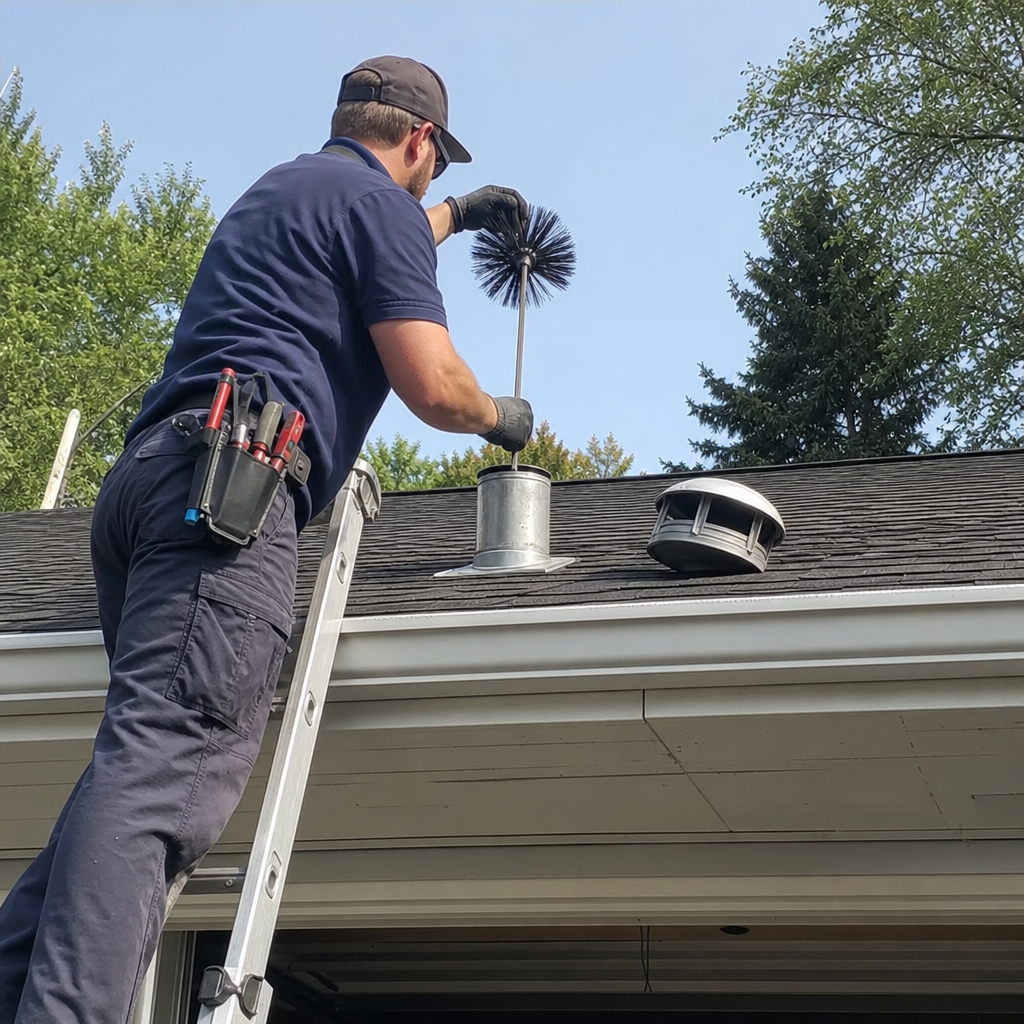
Fast, Reliable Dryer Vent Cleaning Across Washington, D.C.
Dryer vent cleaning in Washington, D.C. typically costs $180–$340 for standard residential service, with most jobs completed same-day. Apex Air Duct Cleaning Maryland brings 14 years of specialized indoor air quality experience to Washington, D.C. row houses, apartments, and single-family homes — owner Robert Garcia handles the work personally, not a subcontracted crew. Call (855) 301-6549 for a free estimate and honest timeline.
We’ve worked the narrow streets of Capitol Hill, the restored Victorians in Shaw, and the mid-century apartment blocks along Connecticut Avenue. Washington, D.C.’s housing stock presents vent configurations we don’t see in newer suburban markets — retrofitted duct paths, interior wall terminations, and decades of accumulated lint in spaces that were never designed for airflow. Our Dryer Vent Cleaning team arrives with Rotobrush and Nikro extraction equipment plus the hands-on knowledge to solve problems that shop-vac operators miss entirely.
Why Apex Air Duct Cleaning Maryland Is Washington, D.C.’s Preferred Dryer Vent Cleaning Company
Washington, D.C. homeowners find us through the same channels most do — referrals from neighbors, property managers, and the 254 verified reviews that average 4.7 stars. That rating matters here because D.C. residents research before they hire. They’re not looking for a coupon special; they’re looking for someone who understands why their 1920s row house dryer takes two cycles and smells like mildew.
Robert Garcia serves as both owner and lead technician on every Washington, D.C. job. There’s no dispatching of day-labor crews, no passing you off to a trainee with a shop vac. When you call (855) 301-6549, you’re speaking with the person who will arrive at your door, assess your vent path, and do the actual work. That ownership-level accountability shows up in our reviews — customers mention Robert by name, not “the technician.”
We carry professional-grade equipment that general HVAC contractors don’t invest in: Rotobrush and Nikro cleaning systems for thorough extraction, Abatement Technologies containment gear to prevent cross-contamination during service, and the specialized tools needed for Washington, D.C.’s non-standard vent configurations. Fourteen years focused exclusively on indoor air quality means we’ve encountered virtually every retrofit workaround this city’s old housing stock can throw at us.
Our Dryer Vent Cleaning Services in Washington, D.C.
Dryer Vent Inspection
Every Washington, D.C. job starts with a full inspection — and here, that means more than checking the exterior cap. We run cameras and airflow meters through the complete vent path, looking for the hidden terminations common in Capitol Hill and Shaw row houses where previous owners routed vents into interior wall cavities or joist bays rather than punching through masonry to the exterior. A typical inspection in Washington, D.C. takes 30–45 minutes and identifies fire hazards that aren’t visible from either end of the run.
Vent Cleaning & Lint Removal
Washington, D.C.’s position in the Potomac–Anacostia basin creates sustained humidity levels that cause lint to clump and adhere inside corrugated ductwork far more aggressively than in drier climates. Our Rotobrush system breaks this compacted lint free while the Nikro extraction unit pulls it out under negative pressure — no mess in your laundry space, no lint pushed deeper into the line. For the heavy accumulation we find in decades-neglected Petworth row houses, we may need to cut strategic access points to reach packed cavities.
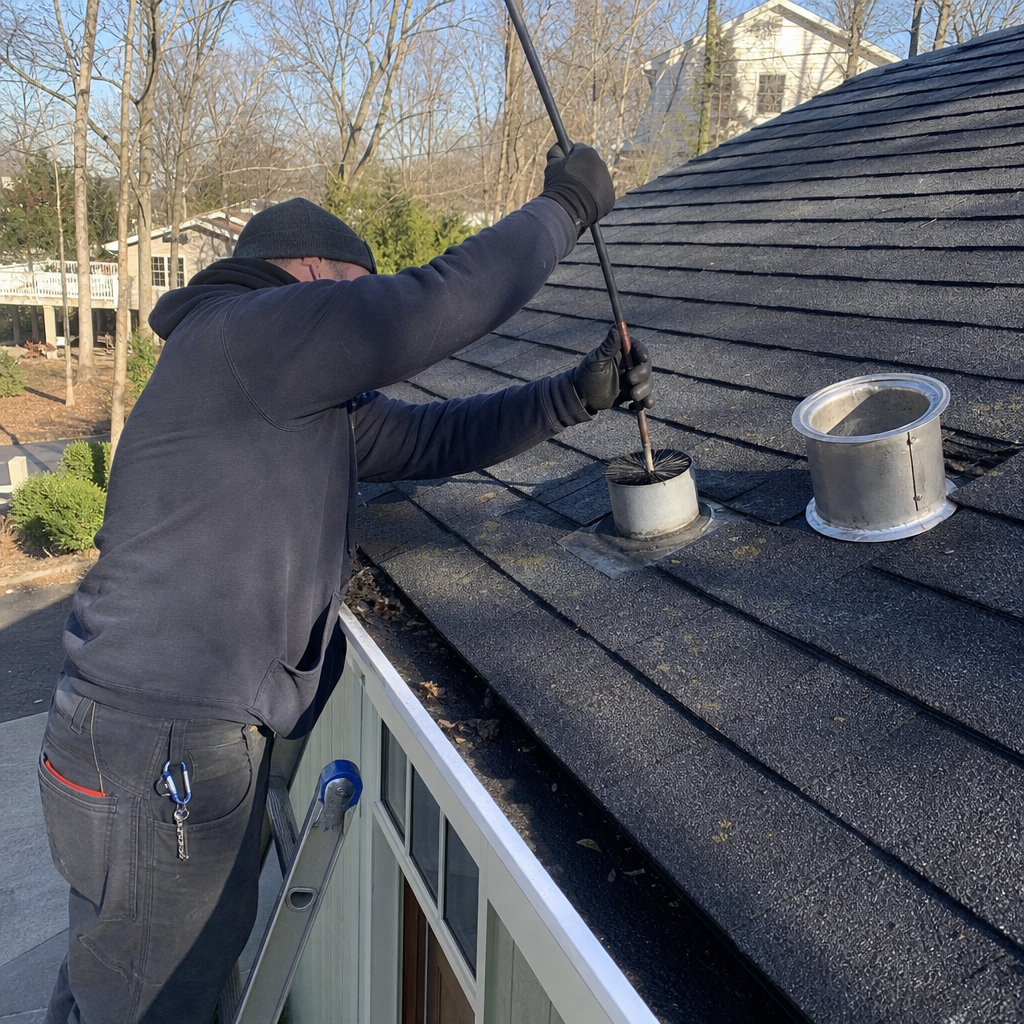
Vent Rerouting
This is our most called-upon specialty service in Washington, D.C. The city’s historic row houses were built for steam heat, not forced air or dryer venting. When laundry facilities were added during 1970s–1990s renovations, vents were often cobbled through closets, soffits, or ceiling joist bays with too many bends, too little slope, or no exterior termination at all. We design new galvanized or smooth-wall aluminum paths that meet current code, terminate properly to the exterior, and can actually be cleaned going forward. A full reroute in Washington, D.C. typically runs $450–$780 depending on path length and access difficulty.

Bird Guard Installation & Vent Cap Replacement
Salt air from the Potomac and Anacostia corridors corrodes exterior vent caps and bird guards within 2–3 years — hardware that might last 8–10 years inland. We install marine-grade stainless or heavily galvanized caps with integrated bird guards, sized for Washington, D.C.’s common 4-inch venting. Replacement caps with bird guards run $85–$140 installed; we carry stock for same-day replacement on most Washington, D.C. service calls.
What happens when you call
- 1
A real person answersNo phone trees — you reach a local pro.
- 2
You get an upfront price rangeHonest numbers before anyone is dispatched.
- 3
A background-checked tech heads outLicensed & insured, dispatched right away.
- 4
You approve before work beginsNothing starts until you say go.
Trusted Brands We Service in Washington, D.C.
Our equipment and supply partnerships reflect the technical demands of Washington, D.C.’s market. We clean with Rotobrush and Nikro systems, contain work zones with Abatement Technologies negative-air units, and when air quality upgrades follow vent cleaning, we specify Honeywell and Aprilaire filtration and humidification components. For sanitizing treatments after mold or heavy biological buildup — common in this humid basin — we use Guardsman-certified application protocols. We maintain local inventory of vent caps, bird guards, and transition fittings sized for the non-standard ducts we encounter in D.C. row houses, so most Washington, D.C. jobs don’t wait on parts.
Common Dryer Vent Cleaning Problems We See in Washington, D.C. Homes
- Interior wall terminations in historic row houses. In Capitol Hill and Shaw, we regularly find dryer vents that dead-end inside plaster wall cavities or joist bays with no exterior cap — a fire hazard that requires cutting access holes just to locate and correct.
- Humidity-compacted lint in corrugated duct. Washington, D.C.’s sustained summer humidity causes lint to clump and harden inside semi-rigid ductwork, reducing airflow faster than in drier climates and creating blockages that standard brushes can’t penetrate.
- Corroded exterior hardware from river-corridor salt air. Vent caps and bird guards on homes near the Potomac or Anacostia seize, pit, or break apart within 2–3 years — requiring replacement with marine-grade materials.
- Collapsed retrofit paths in mid-century apartments. Shared vertical risers in 1950s–1970s D.C. apartment buildings often sag or crush under accumulated lint weight, especially where original galvanized duct has corroded thin.
Pricing for Dryer Vent Cleaning in Washington, D.C., DC
Standard dryer vent cleaning in Washington, D.C. runs $180–$280 for a straightforward single-family or row house vent with exterior termination and moderate lint accumulation. Jobs requiring access-hole cutting for hidden terminations, or those with severe humidity-compacted blockages, typically fall in the $260–$340 range. Full vent rerouting in Washington, D.C.’s historic housing stock — replacing interior-wall or joist-bay paths with proper exterior-terminating duct — averages $450–$780 depending on linear footage and masonry penetration requirements.
| Service | Typical Range in Washington, D.C. |
|---|---|
| Standard vent cleaning (accessible exterior termination) | $180–$280 |
| Heavy lint removal with access cutting | $260–$340 |
| Vent cap replacement with bird guard | $85–$140 |
| Full vent rerouting (row house retrofit) | $450–$780 |
Factors that increase cost: concealed terminations requiring exploratory cutting, multiple story runs in apartment buildings, corroded hardware fused to masonry, and the additional labor of working in tight D.C. utility closets or crawl spaces. We provide upfront written estimates before beginning work — call (855) 301-6549 to schedule.
We Also Serve Cities Near Washington, D.C.
Our service radius covers the immediate Washington, D.C. metro including Shaw, Adams Morgan, Rosslyn, and Arlington. Robert Garcia handles routing personally to minimize drive time and keep appointments reliable — we don’t overbook across distant territories and leave Washington, D.C. customers waiting.
Serving Washington, D.C., DC — Our Local Coverage Area
We’re based in the Washington, D.C. area and know this community well. Use the map below to see our service coverage — if you’re nearby, we can almost certainly help.
FAQs — Dryer Vent Cleaning in Washington, D.C.
They were never designed for dryers. Capitol Hill and Shaw row houses built in the 1920s–1940s had no laundry venting pathway, so retrofitters ran ducts through interior walls, joist bays, and closet chases with too many bends and no exterior termination. These hidden dead-ends trap lint and moisture continuously, while the city’s humid basin climate causes that lint to clump and harden far faster than in drier markets. Call (855) 301-6549 if your row house dryer takes two cycles — that’s the first warning sign.
Every 12–18 months for standard use, but every 8–12 months if your vent path includes any corrugated or non-standard duct sections — which most Capitol Hill retrofits do. The humidity-compacted lint we find in Washington, D.C. reduces airflow faster than dry, fluffy accumulation, shortening safe intervals. We inspect and advise on your specific path during the first visit.
Dead-end terminations inside plaster wall cavities or ceiling joist bays with no exterior cap. On a Petworth row house, we found a dryer vent that ran through a ceiling joist bay and dead-ended behind a plaster wall with no exterior cap — lint had packed the cavity for years. We installed a new galvanized vent path to the rear exterior, replacing the corroded joist-bay section with smooth-wall aluminum duct, and added a bird guard on the new cap. These terminations are invisible from both the laundry room and the building exterior; only camera inspection or airflow testing reveals them.
Yes — but only if it’s marine-grade. Sparrows and starlings nest in Washington, D.C. vent openings year-round, and blocked vents are a leading cause of dryer fires nationally. Standard bird guards corrode and seize in 2–3 years from Potomac/Anacostia salt air; we install stainless or heavily galvanized units that hold up. A proper bird guard costs far less than a fire department call or dryer replacement.
Yes. Washington, D.C.’s location at the confluence of the Potomac and Anacostia rivers exposes exterior hardware to salt-laden air that accelerates corrosion dramatically. We replace standard vent caps and bird guards with marine-rated alternatives on every Washington, D.C. job — it’s not an upsell, it’s the only specification that lasts. Call (855) 301-6549 for a free inspection of your exterior vent hardware condition.
Written by Robert Garcia, Owner at Apex Air Duct Cleaning Maryland, serving Washington, D.C. and Baltimore since 2010.