
Fast, Reliable Air Quality & Sanitizing Across Laurel
Air quality and sanitizing service in Laurel typically runs $275–$650 depending on home size and contamination level, with most appointments scheduled within 24–48 hours. If you’re noticing musty odors from vents, persistent allergy symptoms, or visible mold around registers in your Laurel home, professional duct sanitizing targets the microbial growth that standard cleaning leaves behind.
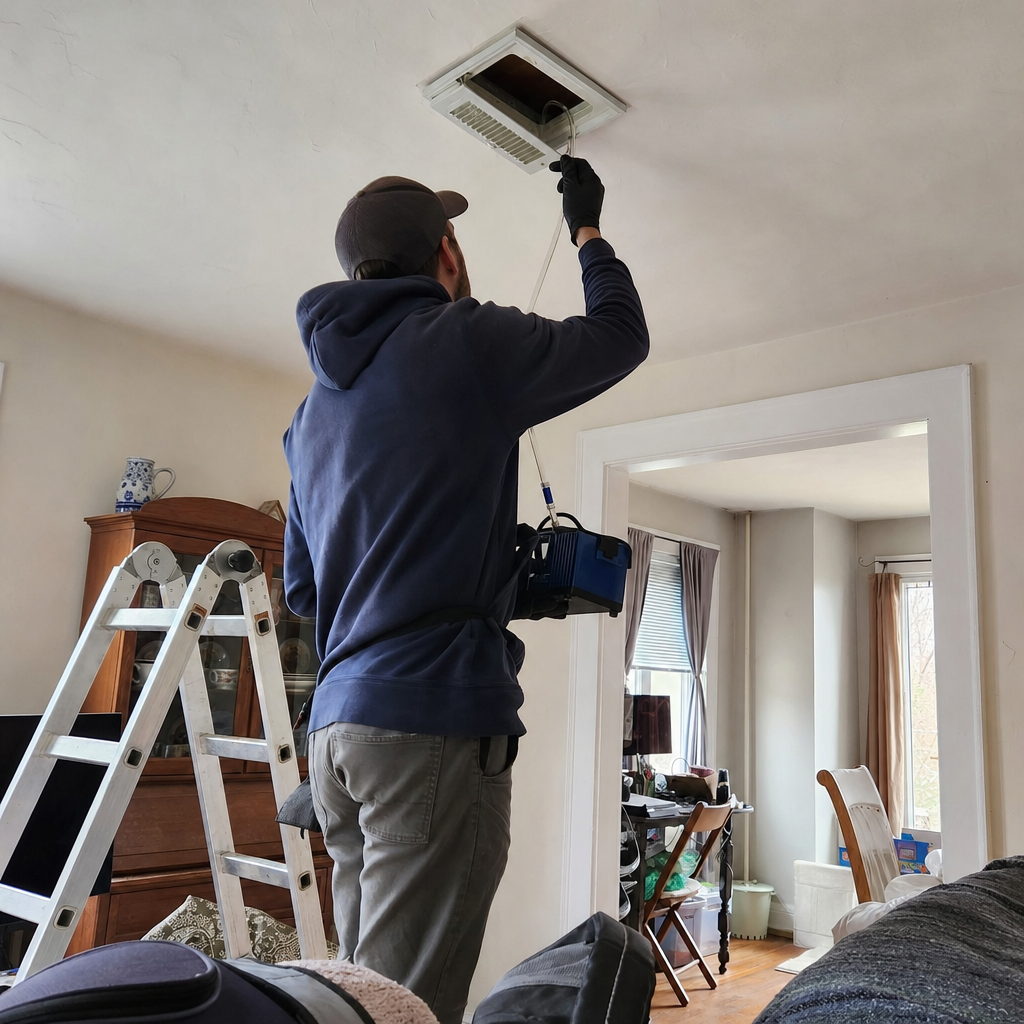
We know Laurel well. From the Route 1 corridor townhomes in 20707 and 20708 to the historic homes near Main Street in the Old Laurel core, our Air Quality & Sanitizing team has treated duct systems across every neighborhood in this city. Robert Garcia handles the work personally — he’s the lead technician on every job, not a subcontractor you meet for the first time at your door. Call (855) 301-6549 for a free estimate.
Why Apex Air Duct Cleaning Maryland Is Laurel’s Preferred Air Quality & Sanitizing Company
Fourteen years and 254 reviews at 4.7 stars means we’ve earned our reputation one appointment at a time. Laurel customers specifically mention Robert’s hands-on approach in their feedback — they expected a crew of strangers and got the owner with a Rotobrush system and a plan.
Our response time to Laurel averages same-day or next-day because we’re based in Baltimore with direct routes down I-95 and Route 1. We don’t schedule you three weeks out and then dispatch a third-party crew. Robert drives the van, sets up the Abatement Technologies containment, and oversees the sanitizing protocol himself.
That local knowledge matters in Laurel more than most cities. We understand how the Patuxent River watershed humidity affects your specific duct materials — the fiberglass duct board common in 1970s–80s construction here behaves differently than metal ducts in newer markets. We’ve treated enough Route 1 corridor townhomes to recognize the stacked-floor configurations that require specialized negative-pressure setup. This isn’t theoretical expertise; it’s repeated field experience in ZIP codes 20708, 20709, 20723, and 20724.
Our Air Quality & Sanitizing Services in Laurel
Mold Treatment
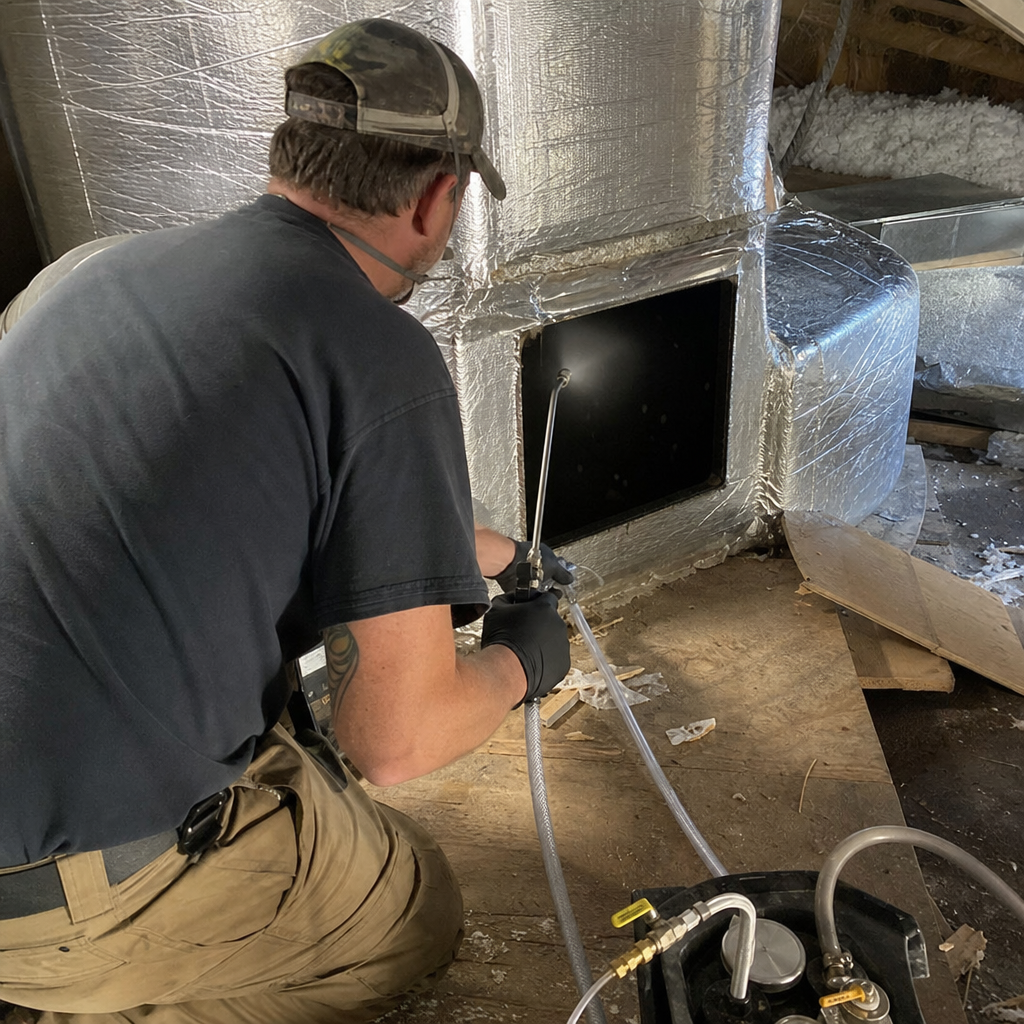
Mold treatment in Laurel runs $350–$650 for typical townhome systems, with larger single-family homes or severe colonization reaching $800–$1,200. Laurel’s position in the Patuxent River lowlands creates sustained indoor humidity levels that accelerate mold growth in aging duct systems, making air duct cleaning here as much a mold-mitigation task as a dust-removal one. The fiberglass duct board liners in 1970s–80s townhomes along Route 1 absorb moisture like a sponge; once mold colonizes the porous surface, standard agitation cleaning won’t reach the root structures. We apply EPA-registered biocides followed by polymer encapsulation on deteriorating fiberglass to prevent regrowth — a protocol we developed specifically for Laurel’s housing stock.

Bacteria Sanitizing
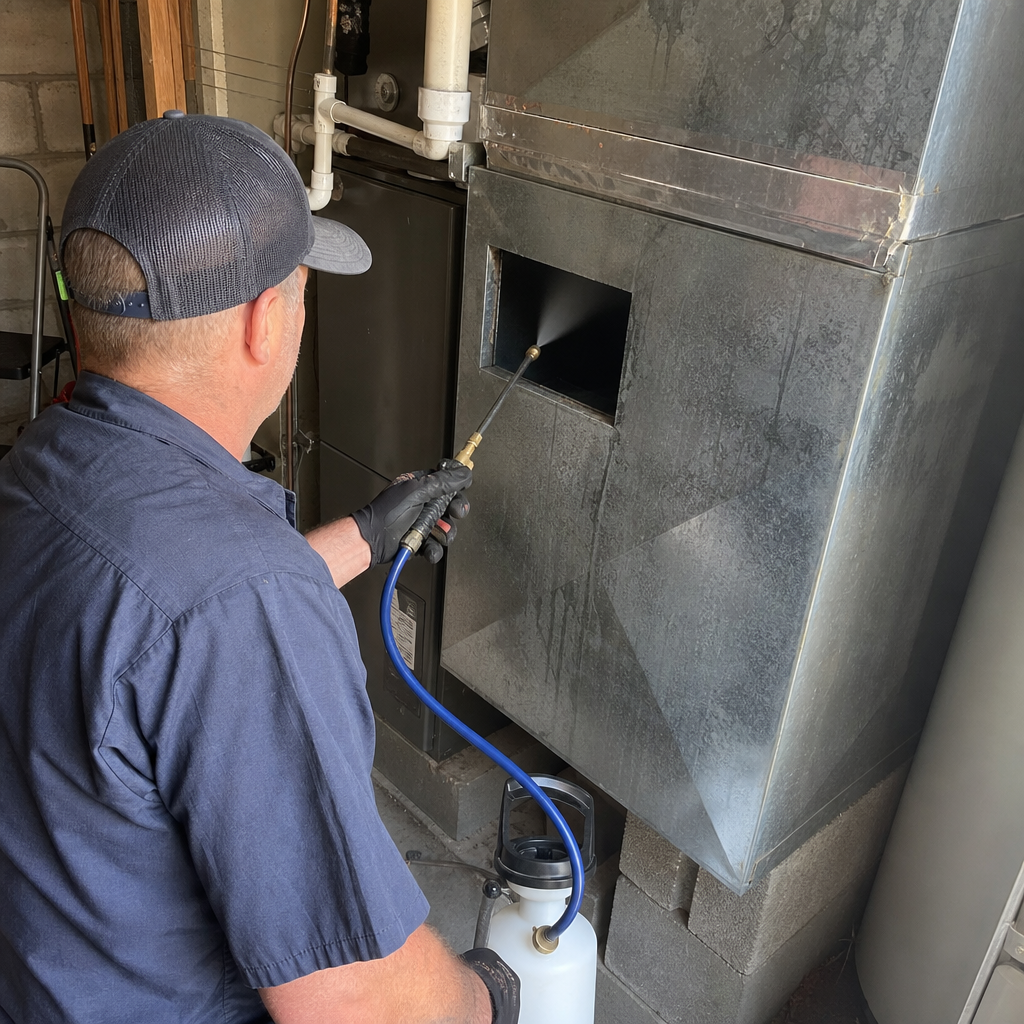
Bacteria sanitizing typically costs $275–$450 in Laurel, often bundled with mold treatment for comprehensive coverage. The same humidity that drives mold growth here creates ideal conditions for bacterial biofilm buildup on duct interiors, especially in systems that haven’t been professionally cleaned in five-plus years. We use hospital-grade sanitizing agents applied through our Nikro fogging equipment, with Abatement Technologies HEPA containment to prevent cross-contamination during treatment. For homes near the Patuxent River floodplain or with crawlspace duct runs, we recommend annual bacteria sanitizing as part of a maintenance cycle.

Odor Removal
Odor removal service in Laurel ranges from $200 for targeted register treatment to $500–$700 for whole-system deodorizing with source elimination. That musty smell seeping through second-floor registers in your Route 1 corridor townhome? It’s almost always mold in the original fiberglass duct board trunk — not something candles or vent filters will touch. We were called to a 1970s townhome in the 20707 corridor off Route 1 where a musty smell was seeping through second-floor registers. The owner had tried over-the-counter mold sprays, but we found heavy growth in the original fiberglass duct board trunk. We performed a full sanitizing treatment with an EPA-registered biocide, then sealed the fiberglass liner with a polymer coating to prevent regrowth. The smell didn’t return. Odor removal without source identification is masking, not solving — we locate the origin before treating.

UV Light Installation
UV-C light installation in Laurel homes runs $400–$850 per unit, with most townhomes requiring one strategically placed lamp while larger homes may need two. Given Laurel’s humidity profile, UV lights installed downstream of the coil provide continuous suppression of mold and bacterial regrowth between professional cleanings. We size and position these for your specific duct geometry — critical in the non-standard layouts we find in Old Laurel’s retrofitted historic homes near Main Street, where improvised branch runs create shadows and dead zones that compromise UV effectiveness if not accounted for.
What happens when you call
- 1
A real person answersNo phone trees — you reach a local pro.
- 2
You get an upfront price rangeHonest numbers before anyone is dispatched.
- 3
A background-checked tech heads outLicensed & insured, dispatched right away.
- 4
You approve before work beginsNothing starts until you say go.
Trusted Brands We Service in Laurel
We maintain active authorization with Honeywell and Aprilaire air quality systems, and we stock Guardsman sanitizing products for treatments requiring residual antimicrobial protection. Our Rotobrush and Nikro extraction equipment handles the mechanical cleaning phase, while Abatement Technologies containment systems protect your living space during the sanitizing process. For Laurel customers, this means no waiting on parts orders from Baltimore or DC — Robert carries the full treatment inventory in the service van. If your home already has an Aprilaire media air cleaner or Honeywell electronic air purifier, we integrate our sanitizing protocol with your existing equipment rather than treating it as an isolated add-on.
Common Air Quality & Sanitizing Problems We See in Laurel Homes
- Fiberglass duct board liners in 1970s–80s townhomes absorb moisture and foster mold that standard cleaning alone cannot remove without sanitizing. The porous surface traps spores below the visible layer; agitation without biocide application releases them into your airflow. We see this in virtually every Route 1 corridor townhome built between 1970 and 1985.
- Improper negative pressure during cleaning in stacked townhomes pushes particulate and spores into upper-level bedrooms through open registers. In the stacked-floor townhomes of the 20707/20708 corridor, a single vertical trunk line feeds all levels with minimal branch runs, so one fouled main duct contaminates every room in the unit simultaneously — and if a technician doesn’t establish proper negative pressure before agitating debris, displaced particulate travels straight up into second- and third-floor bedrooms through open registers. We seal and isolate each floor before agitation.
- Retrofits in Old Laurel’s early-20th-century homes create non-standard duct layouts, leaving dead-end branches that trap debris and require custom sanitizing tools. The historic Old Laurel core near Main Street contains early-20th-century single-family homes frequently retrofitted from radiator or baseboard heat to forced-air systems, creating improvised duct layouts that complicate thorough cleaning. Our Nikro equipment adapts to these constraints; generic shop-vac setups don’t.
- Persistent condensation in crawlspace duct runs during Laurel’s humid summers creates recurring mold pressure even after initial treatment. Without addressing the moisture source — often inadequate crawlspace vapor barriers or missing duct insulation — sanitizing becomes a temporary fix. We identify these contributing factors and recommend targeted solutions.
Pricing for Air Quality & Sanitizing in Laurel, MD
| Service | Typical Range in Laurel | What Affects Cost |
|---|---|---|
| Bacteria Sanitizing (whole system) | $275–$450 | System size, access difficulty, contamination level |
| Mold Treatment | $350–$650 | Extent of colonization, duct material (fiberglass vs. metal) |
| Severe Mold Remediation | $800–$1,200 | Multiple zones, duct board replacement needs |
| Odor Removal (targeted) | $200–$300 | Number of affected registers, source accessibility |
| Odor Removal (whole system) | $500–$700 | System size, need for multiple treatment passes |
| UV Light Installation | $400–$850 | Unit specifications, electrical access, duct geometry |
| Air Purifier Installation | $600–$1,500 | Unit capacity, existing duct integration complexity |
Laurel’s older housing stock — particularly the fiberglass duct board systems in 1970s–80s townhomes — often requires more intensive treatment than metal-duct homes in newer markets, which pushes some jobs toward the higher end of these ranges. We assess every system with a borescope inspection before quoting; you’ll know the exact cost before work begins. Estimates are free. Call (855) 301-6549 to schedule.
We Also Serve Cities Near Laurel
Our service radius covers Maryland City, Savage, South Laurel, and Fort George G Mead Junction with the same response commitment we offer Laurel itself. Robert handles routes personally, so proximity to our Baltimore base means these communities get direct scheduling without the referral runaround you’d get from a national booking service.
Serving Laurel, MD — Our Local Coverage Area
We’re based in the Laurel area and know this community well. Use the map below to see our service coverage — if you’re nearby, we can almost certainly help.
FAQs — Air Quality & Sanitizing in Laurel
Yes — if your home has original fiberglass duct board, sanitizing is essential, not optional. The porous material traps mold and bacteria below the surface layer that mechanical cleaning reaches; without biocide application and encapsulation, regrowth typically occurs within 6–12 months in Laurel’s humid climate. Call (855) 301-6549 and we’ll inspect with a borescope to confirm whether your system needs this additional step — estimates are free.
In Laurel’s 1970s–80s townhomes, a musty smell from upper-floor vents almost always indicates mold in the main trunk line. The stacked-floor design means one contaminated vertical duct feeds all levels; the smell concentrates upstairs because warm, moist air rises and carries spores with it. We find active colonization in roughly 80% of these cases — not surface dust, but embedded growth in fiberglass liners. Call (855) 301-6549 for a same-week inspection.
Control moisture first, then maintain with UV-C suppression. In Laurel’s Patuxent River watershed environment, we recommend sealing crawlspace duct runs with proper vapor barriers, installing a UV light downstream of your coil, and scheduling follow-up inspections every 18–24 months. The polymer encapsulation we apply to deteriorating fiberglass duct board creates a non-porous surface that resists re-colonization significantly better than raw fiberglass.
Yes — the improvised duct layouts in Old Laurel’s retrofitted homes require adapted equipment and modified protocols. Non-standard branch runs, sharp turns, and dead-end sections common in these conversions don’t accommodate standard fogging patterns; we use targeted application tools and smaller-diameter hoses from our Nikro system to reach confined spaces. The sanitizing agents remain the same, but the delivery method changes.
Yes — when mold is the actual allergen source. If your allergy symptoms correlate with HVAC runtime or specific rooms, and borescope inspection confirms active mold colonization, professional sanitizing with source elimination typically reduces spore counts by 90% or more. We recommend pairing this with a HEPA-rated media filter (we install Aprilaire and Honeywell units) for sustained relief. Call (855) 301-6549 to discuss whether your symptoms match a duct-source pattern — estimates are free.
Written by Robert Garcia, Owner at Apex Air Duct Cleaning Maryland, serving Laurel since 2010.