
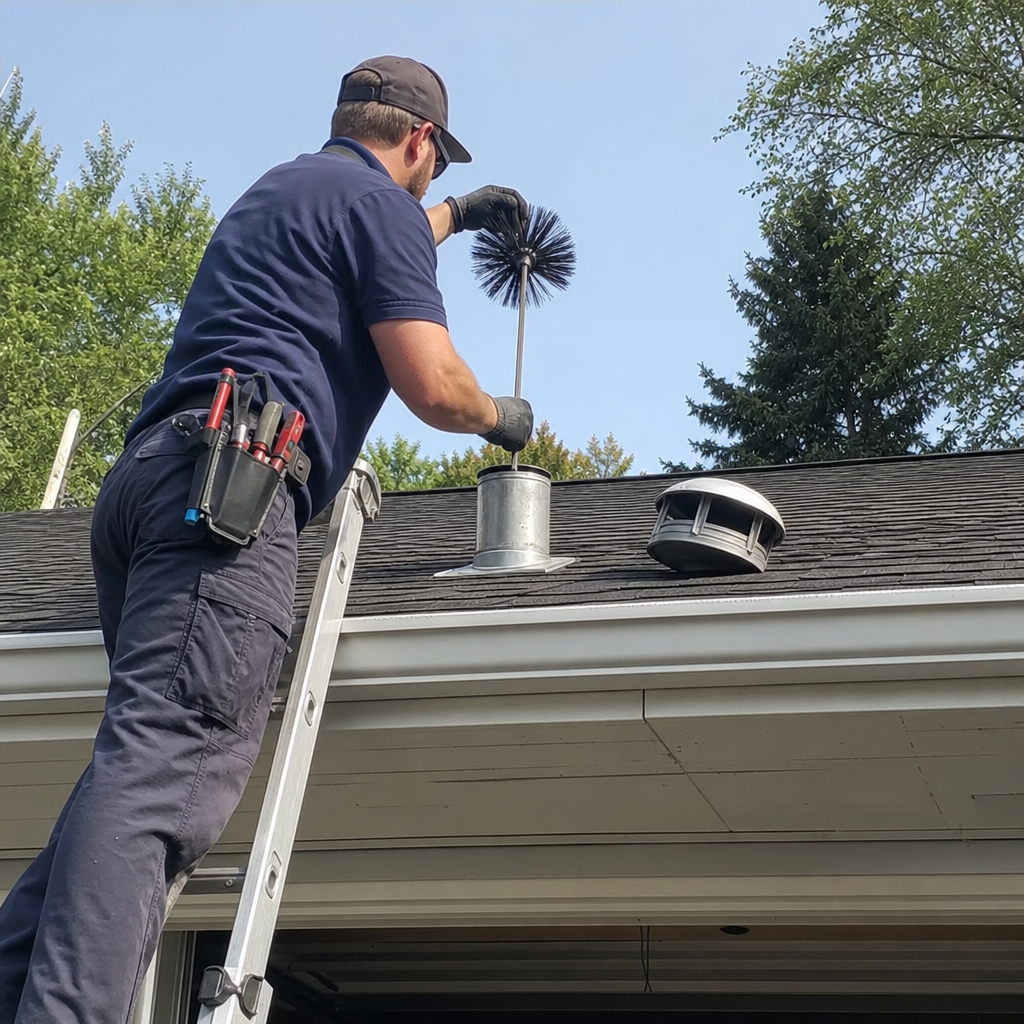
Fast, Reliable Dryer Vent Cleaning Across Wolf Trap
Dryer vent cleaning in Wolf Trap typically runs $180–$340 for a standard single-family home, and most jobs are completed in under two hours with same-week scheduling available. If your dryer is taking two cycles to finish a load, or you’ve noticed a burning smell near the laundry room, you’re looking at a clogged vent — and in Wolf Trap’s wooded environment, that clog is often worse than it appears from inside the house.
We’ve been driving our Dryer Vent Cleaning trucks down Route 7 and through the winding roads of 22182 for years. Robert Garcia handles every job personally, bringing 14 years of focused air duct and dryer vent experience to homes from the park buffer near Wolf Trap National Park for the Performing Arts to the established neighborhoods along Beulah Road. When you call (855) 301-6549, you’re talking to the same person who’ll show up with the Rotobrush and Nikro equipment — not a dispatcher sending a subcontractor you’ve never met.
Why Apex Air Duct Cleaning Maryland Is Wolf Trap’s Preferred Dryer Vent Cleaning Company
Wolf Trap isn’t a market we dabble in. It’s a 40-minute run from our Baltimore base, and we make it regularly because the conditions here — dense hardwood canopy, older housing stock, park-adjacent moisture patterns — create vent problems that general handymen and coupon-service crews consistently misdiagnose. Our 254 verified reviews average 4.7 stars, and a growing share come from Fairfax County homeowners who found us after a bad experience with a shop-vac operator who cleared the lint trap and called it “cleaned.”
Robert Garcia arrives as the lead technician on every Wolf Trap job. That means ownership-level accountability: he’s the one crawling into your crawlspace, running the camera, and explaining what your 1970s flex ductwork can handle versus what it can’t. We typically schedule Wolf Trap appointments within 3–5 business days, with emergency slots available when a blocked vent has shut down the dryer completely or you’re seeing visible moisture staining on interior walls.
We know the local housing stock. The 22182 ZIP is dominated by large single-family homes built during Fairfax County’s 1970s–1980s suburban expansion, many with original fiberglass-lined metal ducts or early flex ductwork that’s now past its 40-year mark. These multi-zone HVAC layouts create long duct runs — more surface area, more bends, more places for lint and organic debris to accumulate. A technician who doesn’t understand that legacy construction will miss half the problem.
Our Dryer Vent Cleaning Services in Wolf Trap
Dryer Vent Inspection
Every Wolf Trap job starts with a camera inspection. Robert runs a flexible borescope through the full vent run — from the dryer connection to the exterior cap — documenting lint density, moisture damage, and any structural issues in the ductwork. In homes near the Wolf Trap park buffer, we’re specifically looking for organic intrusion: leaves, seed pods, and decomposing matter that doesn’t belong in a dryer vent but gets drawn in from the forest edge. The inspection takes 20–30 minutes and comes with a written report showing before-and-after images. You’ll see exactly what we see — no guesswork, no upsell pressure.

Vent Cleaning & Lint Removal
Our Rotobrush system scrubs the full interior surface of your vent line with rotating bristle heads sized to your duct diameter, while simultaneous vacuum extraction pulls dislodged debris into a sealed Nikro HEPA collection unit. This matters in Wolf Trap because lint here rarely travels alone. The heavy pollen pulses from the surrounding hardwood forest coat interior duct surfaces with a sticky organic film that standard vacuuming won’t touch. The Rotobrush mechanical action breaks that bond. For severe clogs — the kind that back up dryers for two, three cycles — we’ll also deploy compressed-air whipping tools to break through compacted blockages without damaging aging flex duct.

Vent Rerouting
Some 22182 homes have vent runs that were poorly designed from the start: too long, too many bends, or routed through unconditioned attic spaces where condensation accelerates lint adhesion. Others have been modified by previous owners in ways that violate current safety standards. Robert assesses whether your existing route can be optimized — shortening the run, reducing elbows, or relocating the exterior termination to a wall cap instead of a roof jack. Rerouting in Wolf Trap often means working around mature landscaping and established hardscaping, so we plan the job to minimize disruption to your property. Typical reroutes run $450–$780 depending on materials and access.

Bird Guard Installation
This is where Wolf Trap’s wooded character becomes a direct maintenance issue. Homes backing onto the national park buffer or lining the forested stretches of Beulah Road see constant avian activity — chickadees, wrens, and house sparrows looking for sheltered nesting cavities. A standard louvered vent cap with damaged or missing flappers is an open invitation. We install heavy-duty stainless steel bird guards with 1/4-inch mesh that blocks nesting material while maintaining proper airflow. Unlike cheap hardware-store versions that clog with lint themselves, our guards are designed for dryer vent application and include integrated cleanout access. Installation runs $120–$195 per vent, often paired with a full cleaning.
Vent Cap Replacement
The exterior cap is your vent system’s most vulnerable component in Wolf Trap. Falling leaves and seed pods from the dense canopy — oak, maple, tulip poplar — wedge in louvers and prevent them from closing, letting in rain, pollen, and pests. We replace damaged caps with code-compliant models featuring backdraft dampers and proper clearance from siding and trim. For homes in the deepest shade where moisture retention is highest, we specify corrosion-resistant aluminum or stainless steel rather than standard galvanized steel that will rust through in 3–4 years.
What happens when you call
- 1
A real person answersNo phone trees — you reach a local pro.
- 2
You get an upfront price rangeHonest numbers before anyone is dispatched.
- 3
A background-checked tech heads outLicensed & insured, dispatched right away.
- 4
You approve before work beginsNothing starts until you say go.
Trusted Brands We Service in Wolf Trap
We carry replacement components from Honeywell and Aprilaire for integrated whole-house systems, and our containment and extraction setup relies on Abatement Technologies equipment to prevent cross-contamination during service — critical when we’re working in finished basements or occupied living spaces. For dryer vent-specific hardware, we stock caps, guards, and transition ducts from manufacturers who rate their products for the humidity and pollen load we see in Northern Virginia’s park-adjacent communities. Parts are on the truck, so most Wolf Trap repairs don’t require a return visit.
Common Dryer Vent Cleaning Problems We See in Wolf Trap Homes
- Canopy debris blocking exterior caps. The mature hardwood forest surrounding Wolf Trap National Park sheds leaves, samaras, and seed pods that accumulate in vent louvers and screens. We regularly find caps completely packed with organic matter on homes that haven’t been serviced in two-plus years — the dryer overheats, shuts down on thermal limit, or simply can’t push air past the blockage.
- Long, convoluted duct runs in 1970s–1980s construction. The multi-zone HVAC layouts common in 22182’s large homes often translate to dryer vent runs with three or more 90-degree bends and 25+ feet of horizontal or vertical duct. Lint and debris collect at every turn, and these runs exceed the 25-foot maximum recommended by most appliance manufacturers when accounting for bend equivalents.
- Moisture-driven biofilm accelerating lint adhesion. Crawlspace and basement air handlers near the forest floor pull in elevated ground moisture and decomposing organic matter — a condition Robert encounters on the park-buffer jobs that technicians in Vienna’s more open subdivisions rarely see. That moisture migrates into adjacent ductwork, creating a sticky biofilm that traps lint far more aggressively than dry metal duct.
- Damaged or missing caps from weather and wildlife. Wolf Trap’s mature trees don’t just drop debris — they shelter squirrels and birds that pry at loose caps, and winter ice storms can crack plastic louvers. A compromised cap is the fastest path to a completely blocked vent, and many homeowners don’t notice until the dryer fails.
Pricing for Dryer Vent Cleaning in Wolf Trap, VA
| Service | Typical Range in Wolf Trap |
|---|---|
| Standard dryer vent cleaning (single-story, straight run) | $180–$240 |
| Multi-story or long-run vent cleaning | $260–$340 |
| Vent rerouting | $450–$780 |
| Bird guard installation | $120–$195 |
| Vent cap replacement | $85–$150 |
| Camera inspection (standalone) | $95–$125 |
What moves you within these ranges? Duct length and accessibility are the big factors. A straight 8-foot run through an interior wall costs less than a 35-foot run through an unconditioned crawlspace with two elbows. Homes on heavily wooded lots near the park buffer often need more time for organic debris removal. We don’t quote over the phone for complex jobs — we inspect first, show you what we found, and give you a fixed price before work begins. Estimates are free. Call (855) 301-6549 to schedule.
We Also Serve Cities Near Wolf Trap
Our service radius covers the full Fairfax County corridor. We regularly schedule Dryer Vent Cleaning appointments in Dunn Loring, Idylwood, Tysons Corner, and Vienna — often grouping jobs by geography to keep response times tight for Northern Virginia homeowners. If you’re in one of these communities and dealing with slow-drying loads or a suspected blockage, the same equipment and the same technician make the same drive.
Serving Wolf Trap, VA — Our Local Coverage Area
We’re based in the Wolf Trap area and know this community well. Use the map below to see our service coverage — if you’re nearby, we can almost certainly help.
FAQs — Dryer Vent Cleaning in Wolf Trap
Every 12–18 months for most Wolf Trap homes, and every 9–12 months if your property backs onto the Wolf Trap National Park for the Performing Arts or sits under heavy canopy cover. The dense hardwood forest produces more organic debris and pollen than open suburban lots, and that material finds its way into vent caps and duct interiors faster than the standard annual recommendation. Call (855) 301-6549 and we’ll assess your specific tree cover and vent configuration.
The wooded environment is the likely cause. Homes near the park buffer or on heavily treed lots see more exterior debris intrusion, and the shaded, moisture-retaining conditions promote lint adhesion inside ducts. Your previous home may have had a shorter vent run or less canopy cover. A camera inspection will show whether you’re dealing with a simple lint accumulation or organic matter from the surrounding forest. We can usually restore normal dry times in a single visit.
Yes, if your home is within a quarter-mile of the park buffer or has mature trees within 30 feet of the exterior cap. The avian population in this area is dense, and standard louvered caps provide easy nesting access once flappers stick open from debris or age. Our stainless steel guards with integrated cleanout ports run $120–$195 installed and prevent the blocked-vent emergencies we see every spring. Call (855) 301-6549 to check your current cap condition.
You can clear the lint trap and the first few feet of transition duct safely. Beyond that, we don’t recommend DIY. The long, multi-bend runs common in 22182’s 1970s–1980s homes require specialized rotary tools and camera verification to clean thoroughly without damaging aging flex duct. More critically, the organic debris and potential biofilm growth in park-adjacent properties aren’t addressed by consumer-grade kits. Robert uses professional extraction equipment and containment to protect your home’s air quality during service.
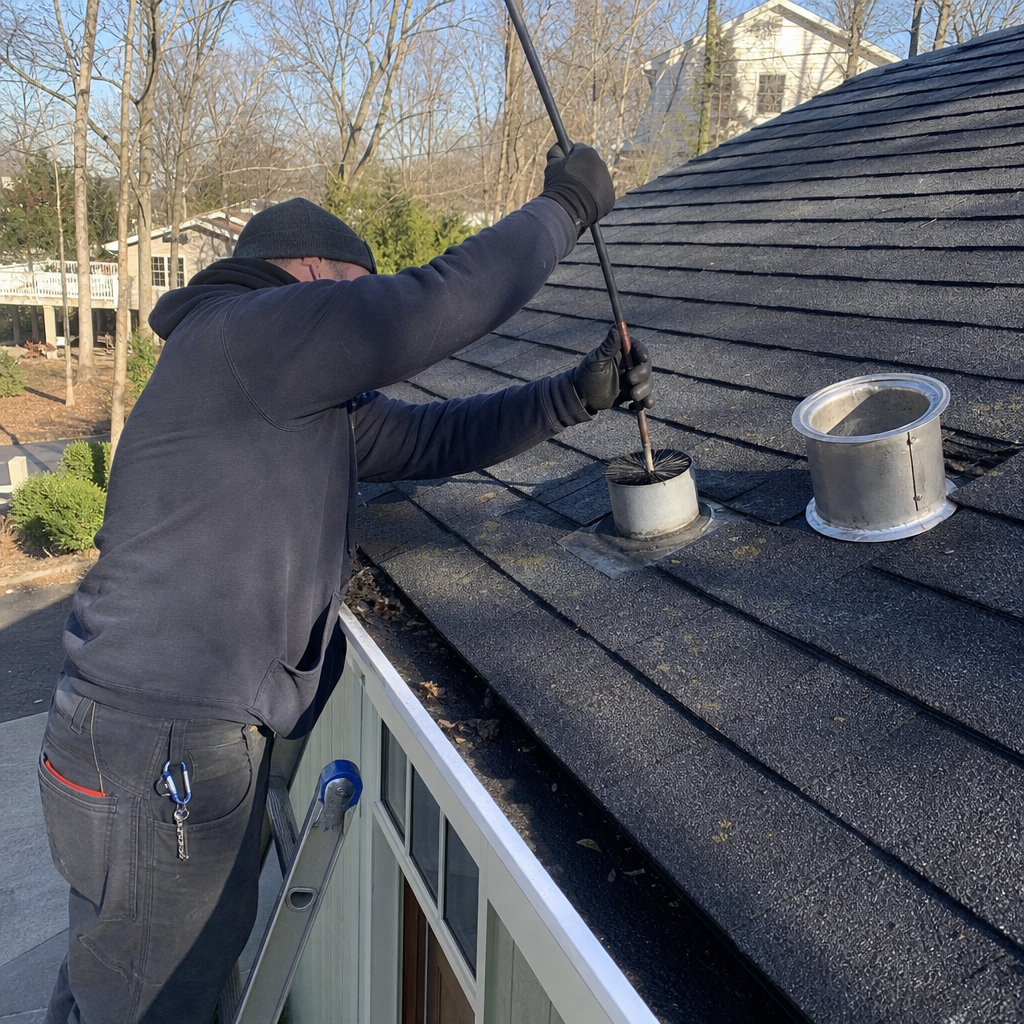
Significantly. The mature hardwood canopy produces heavier leaf and seed fall than more developed areas, and the persistent shade keeps ground and crawlspace moisture elevated well into autumn. That moisture migrates into ductwork, creating conditions where lint adheres more aggressively and organic matter decomposes instead of drying out. On a job near the Wolf Trap park buffer, we found a dryer vent packed with matted leaves and bird nesting material from a damaged cap. Our Rotobrush system cleared the lint and debris, and we installed a heavy-duty bird guard to prevent future intrusions. Forest-edge homes here simply face a more aggressive maintenance environment than comparable properties in Vienna or Reston.
Ready to get your dryer running safely and efficiently? Robert Garcia handles every Wolf Trap job personally, with 14 years of specialized experience and the equipment to match. Call (855) 301-6549 for a free estimate — we’ll inspect your vent, show you exactly what we’re dealing with, and give you a fixed price before any work begins.
Written by Robert Garcia, Owner at Apex Air Duct Cleaning Maryland, serving Wolf Trap and the greater Baltimore-Washington corridor since 2010.