
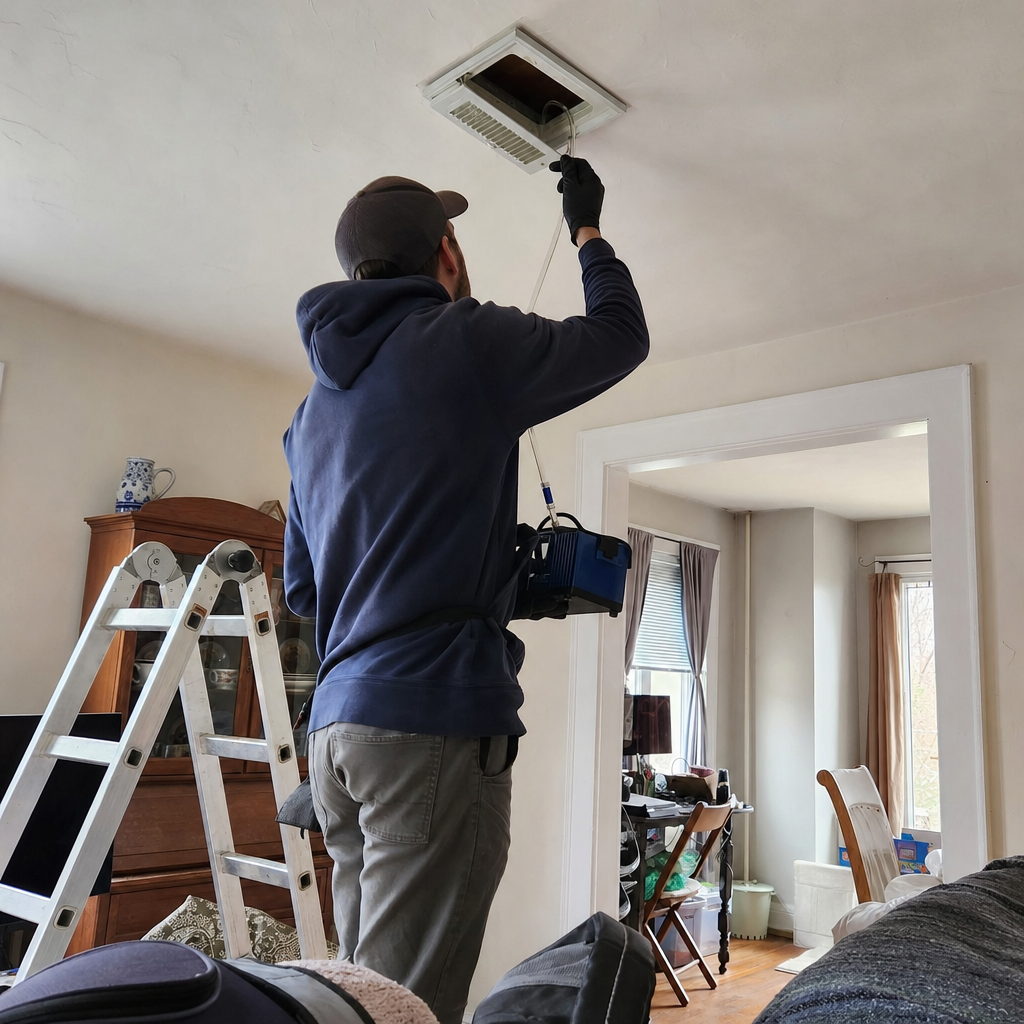
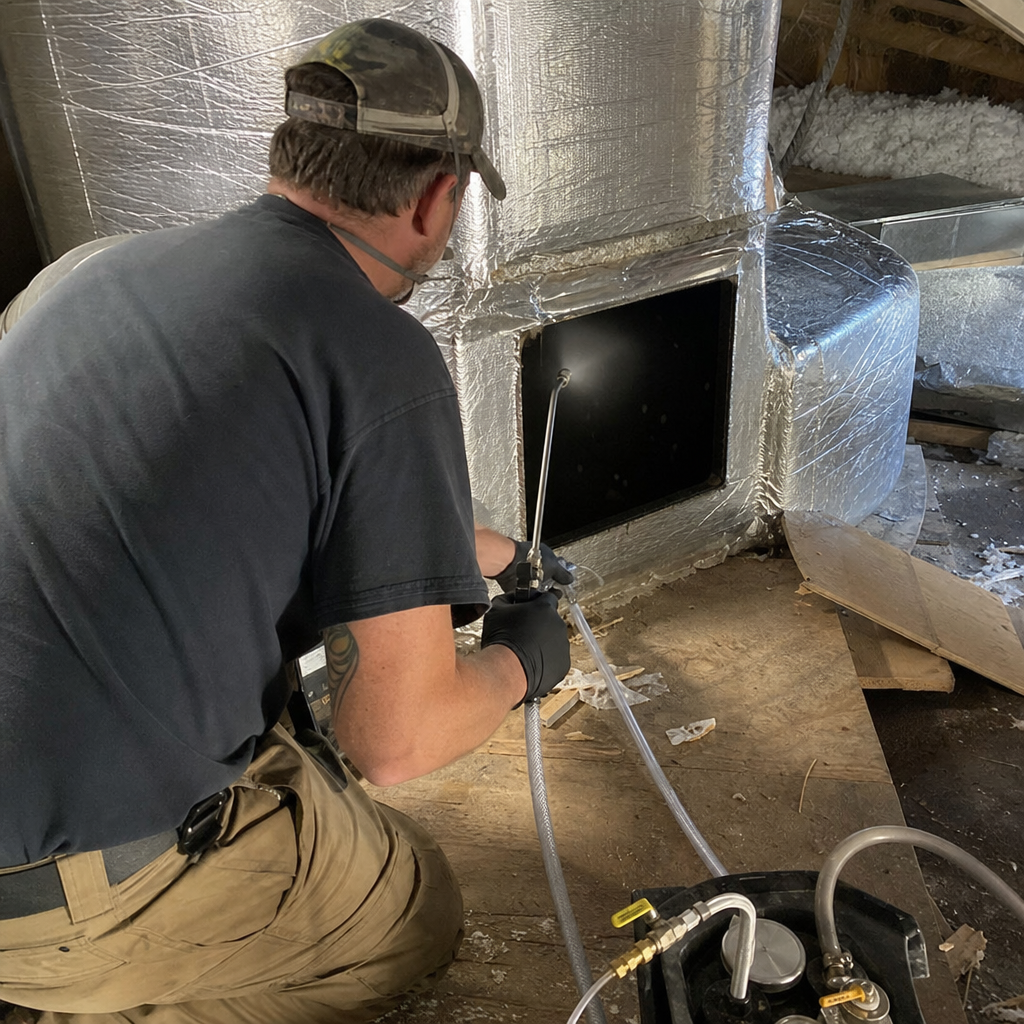
Fast, Reliable Air Quality & Sanitizing Across Mays Chapel
Air quality and sanitizing service in Mays Chapel typically runs $275–$650 for whole-home treatment, with mold remediation in fiberglass duct systems landing toward the higher end due to the area’s persistent humidity. We’re usually on-site within 45 minutes to an hour for Mays Chapel calls, and same-day appointments are common. Call (855) 301-6549 for a free estimate.
We’ve been working in Mays Chapel long enough to know the pattern. Homeowners here—many in those solid colonial and split-level neighborhoods off Seminary Avenue and Wirth Road—do everything right. They change filters quarterly. They run dehumidifiers. And still, that musty, wet-cardboard smell returns every summer. The problem isn’t their housekeeping. It’s the house itself, and the woods, and the reservoir, and the way all three conspire against standard duct materials. That’s where our Air Quality & Sanitizing team comes in. Robert Garcia handles these jobs personally, bringing 14 years of focused duct and HVAC cleaning experience to homes that need more than a surface wipe.
Why Apex Air Duct Cleaning Maryland Is Mays Chapel’s Preferred Air Quality & Sanitizing Company
Our reputation in Mays Chapel was built one crawl space at a time. We’ve got 254 verified reviews averaging 4.7 stars, and a disproportionate share of our detailed, five-star feedback comes from northern Baltimore County homeowners who finally found someone who understood why their ducts kept growing mold. Robert Garcia doesn’t dispatch crews—he’s the lead technician on your job, which means the person with 14 years of specialized experience is the one crawling under your house, not someone learning on your clock.
Response time matters when you’re dealing with active mold or bacteria spreading through your HVAC system. From our Baltimore base, we typically reach Mays Chapel properties in under an hour, and we prioritize calls where occupants are reporting allergy flare-ups or respiratory symptoms tied to air quality issues. We know which Mays Chapel subdivisions have the older fiberglass duct board that needs gentler but more thorough agitation, and which homes near the reservoir edge are fighting groundwater humidity even in supposedly dry months.
The local knowledge runs deeper than zip codes. We know that a home on a wooded lot off Seminary Avenue will present differently than one on a more cleared parcel closer to the York Road corridor. We’ve learned which crawl-space configurations in 1970s and 1980s builds trap condensation, and how to access duct runs that original installers never expected anyone to clean.
Our Air Quality & Sanitizing Services in Mays Chapel
Mold Treatment
Mold treatment in Mays Chapel isn’t optional maintenance—it’s a targeted response to a genuine environmental pressure. The humid microclimate created by Loch Raven Reservoir’s proximity means fiberglass duct board, common in local homes built from the 1970s through the 1990s, absorbs moisture and supports active mold colonies even when indoor humidity reads normal. Our process starts with mechanical agitation using Rotobrush equipment to dislodge biofilm from duct surfaces, followed by antimicrobial application appropriate to the contamination level. In extensive cases, we’ll recommend duct board replacement, but many Mays Chapel systems respond well to thorough cleaning and ongoing humidity management.
At a colonial home on Wirth Road, we found black mold thriving inside fiberglass duct board—common in 1970s builds here—despite the homeowner’s annual filter changes. Our crew applied Rotobrush agitation and a full antimicrobial sanitizing treatment, eliminating the musty odor that had been triggering allergy symptoms for years.

Bacteria Sanitizing
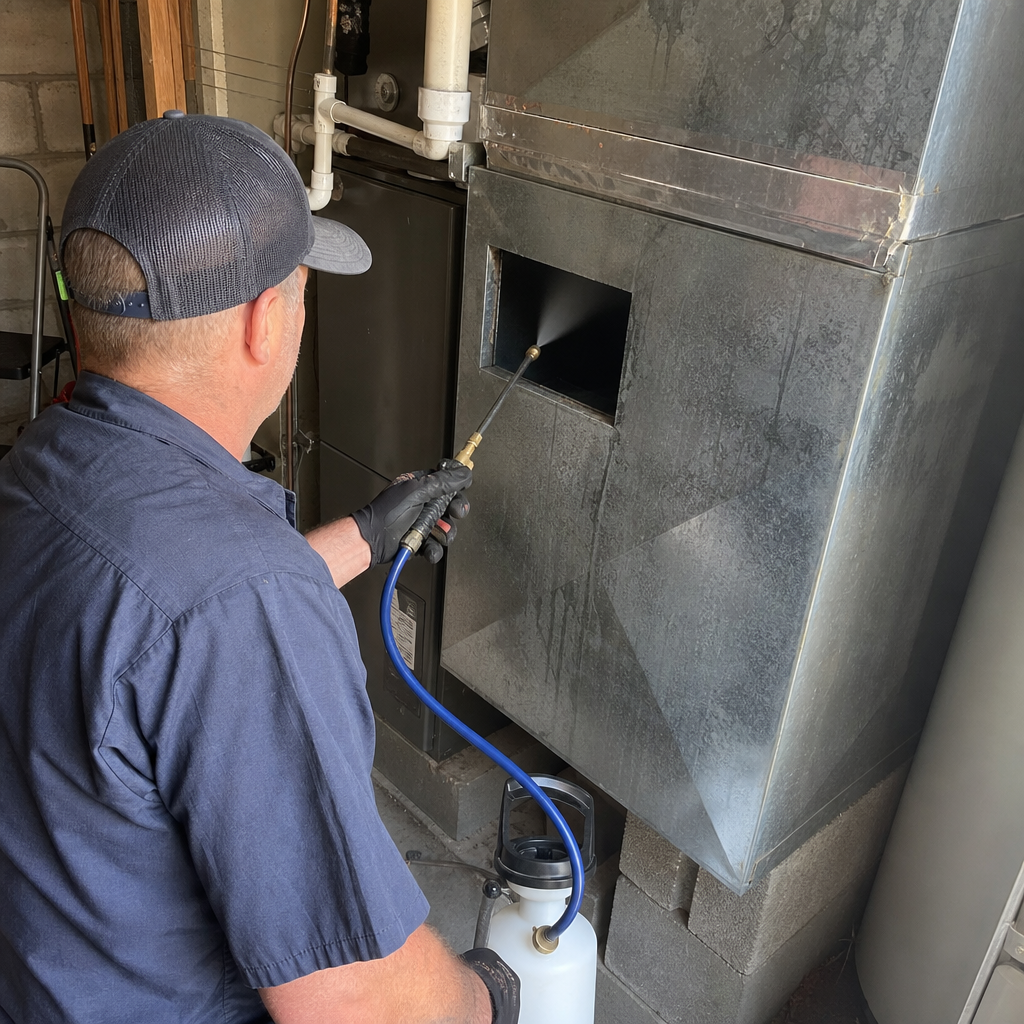
Bacteria sanitizing addresses the microbial load that builds in duct systems, particularly in homes where condensation has been chronic. In Mays Chapel, we see this most often in systems with poorly insulated flex duct runs through damp crawl spaces, where temperature differentials create persistent moisture. Our sanitizing protocol uses professional-grade application equipment—not pump sprayers—to deliver treatment throughout the duct network, including branches that conventional methods miss. We pair this with Abatement Technologies containment to prevent cross-contamination during service.

Odor Removal
That wet-cardboard, stale smell hitting you when the blower kicks on? In Mays Chapel, it’s usually mold or mildew in fiberglass duct board, sometimes compounded by years of accumulated organic debris. Standard filter changes won’t touch it. Our odor removal process targets the source: we clean the full duct run, treat affected surfaces, and identify the moisture entry point so the problem doesn’t regenerate in six months. For reservoir-adjacent homes with chronic humidity challenges, we’ll often recommend pairing cleaning with a dehumidification strategy or UV light installation.

UV Light Installation
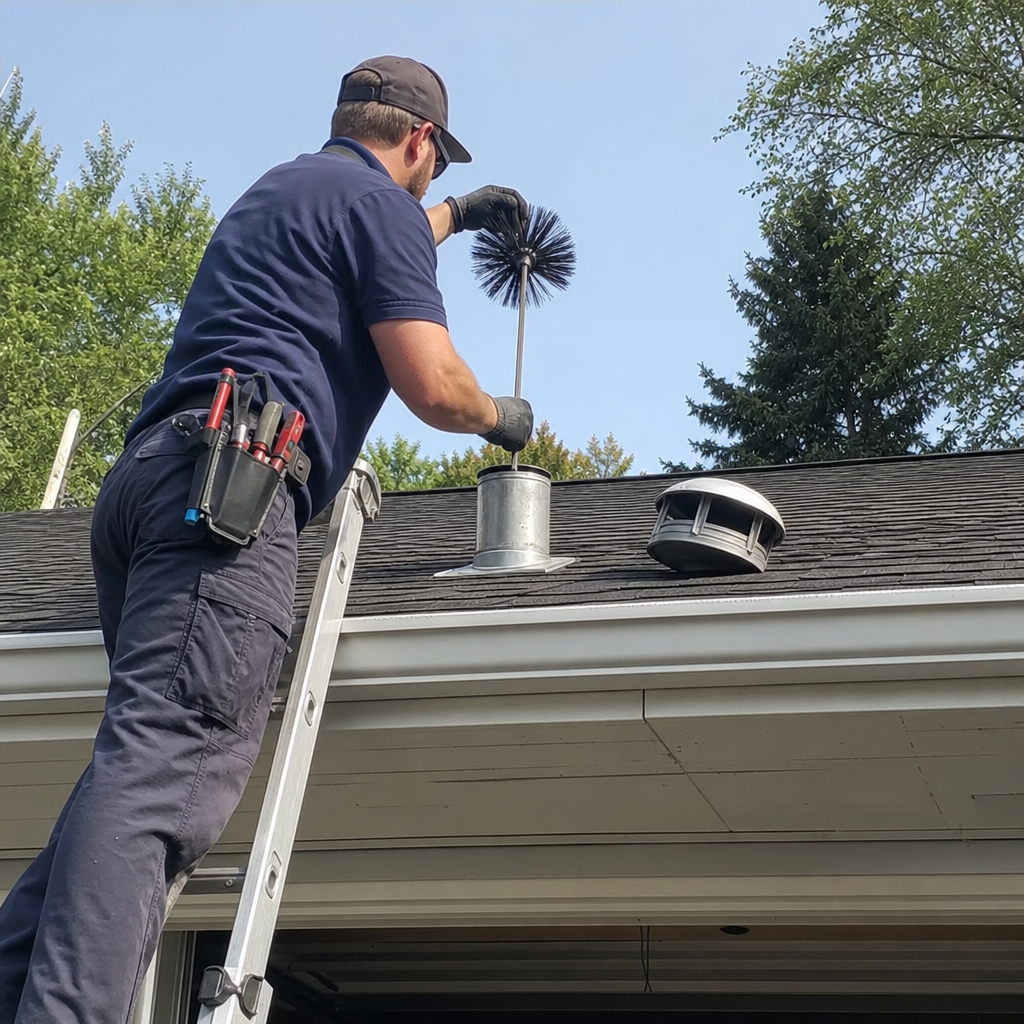
UV light installations in Mays Chapel require a specific precondition: the duct surfaces must be clean first. We’ve seen too many homeowners elsewhere pay for UV lights that never performed because they were installed over existing biofilm, which simply shaded the living mold beneath. In our Mays Chapel work, we clean first, then size and position UV-C lamps for actual surface exposure, typically in the return plenum where microbial loading is highest. We specify Honeywell and Aprilaire systems—brands we know, service, and can source replacement lamps for without extended delays.
Air Purifier Install
Whole-home air purifier installation gives Mays Chapel residents a continuous defense against the particles and microbes that standard filtration misses. We size these to your existing HVAC system’s airflow capacity—critical in older homes where blower motors may already be working hard against restricted ducts. Our installations integrate with Honeywell and Aprilaire units, and we verify post-installation pressure drops to ensure you’re not trading air quality for system efficiency.
Allergen Reduction
Allergen reduction in Mays Chapel means addressing the specific load this environment creates: tree pollen that infiltrates through aging duct seams, mold spores from damp crawl spaces, and dust mite debris that accumulates in fiberglass duct board over decades. Our cleaning protocol removes the accumulated reservoir, and our sanitizing treatment reduces the biological activity that keeps symptoms active. For households with asthma or severe allergy sufferers, we’ll often recommend a maintenance schedule tighter than the standard three-to-five-year interval.

What happens when you call
- 1
A real person answersNo phone trees — you reach a local pro.
- 2
You get an upfront price rangeHonest numbers before anyone is dispatched.
- 3
A background-checked tech heads outLicensed & insured, dispatched right away.
- 4
You approve before work beginsNothing starts until you say go.
Trusted Brands We Service in Mays Chapel
We work with equipment we can stand behind and service without runaround. For air quality and sanitizing in Mays Chapel, that means Honeywell and Aprilaire purification and UV systems, plus Abatement Technologies containment gear that keeps your home’s clean zones separate from work zones during service. We stock replacement UV lamps and media for Honeywell and Aprilaire units, which means Mays Chapel customers aren’t waiting weeks for parts while their system runs unprotected. Our Rotobrush and Nikro cleaning equipment is what lets us actually reach and clean the duct board and flex duct common in local homes—shop-vac attachments and compressed-air wands simply don’t cut it for these materials.
Common Air Quality & Sanitizing Problems We See in Mays Chapel Homes
- Mold blooms in fiberglass duct board due to high humidity from nearby Loch Raven Reservoir. The shaded, reservoir-adjacent lots keep ground-floor crawl-space duct runs damp well into summer, meaning mold remediation inside ducts is often part of the job even when homeowners call only for standard cleaning—a pattern that’s noticeably less common in the sunnier, more exposed subdivisions just a few miles south in Timonium proper.
- Inaccessible crawl-space runs remain damp into summer, requiring mold remediation even on standard calls. Many Mays Chapel homes have duct routing through crawl spaces with limited access hatches, installed during the original 1970s–1990s construction with no thought to future maintenance. We carry the specialized equipment to reach these runs without destructive access cuts.
- UV light installations fail if not paired with pre-cleaning of biofilm on duct surfaces. Homeowners who’ve had UV lights installed elsewhere sometimes call us when odors persist, and we find the lamps were mounted over dirty duct walls where biofilm simply shaded the underlying mold. We correct this with proper pre-cleaning and lamp repositioning.
- Fiberglass duct board shedding particulates after years of humidity cycling. Baltimore County’s swing between cold, dry winters and muggy summers stresses duct board liners over time, causing them to shed particulates into the air stream. Homeowners notice this as increased dust or, in some cases, visible fibers at registers. We assess whether cleaning and sealing will stabilize the material or if section replacement is the safer path.
Pricing for Air Quality & Sanitizing in Mays Chapel, MD
Here’s what you can expect for Mays Chapel’s market:
- Whole-home bacteria sanitizing: $275–$425
- Mold treatment in standard duct system: $350–$650
- Odor removal with full duct cleaning: $400–$595
- UV light installation (single lamp, cleaned system): $450–$725
- Whole-home air purifier install: $850–$1,400
- Allergen reduction package (cleaning + sanitizing + filter upgrade): $495–$750
Factors that push Mays Chapel jobs toward the higher end: extensive fiberglass duct board requiring careful agitation, multiple air handlers in larger homes near the reservoir, and crawl-space access limitations that extend labor time. We don’t quote over the phone for mold remediation without seeing the system—it’s not a upsell tactic, it’s that fiberglass duct board damage isn’t always visible until inspection. Estimates are free, and Robert Garcia conducts them personally. Call (855) 301-6549 to schedule.
We Also Serve Cities Near Mays Chapel
Our service radius covers the full northern Baltimore County corridor. We regularly work in Lutherville and Lutherville-Timonium, where housing stock and humidity patterns overlap with Mays Chapel’s challenges. Timonium proper tends toward somewhat drier conditions and newer duct materials, but we still see reservoir-effect mold in homes near the stream valleys. Hunt Valley to the west sits in a more open, less humid corridor where mold pressure drops noticeably—though we still handle plenty of standard cleaning and sanitizing there. Wherever you’re located, the same owner-led service applies.
Serving Mays Chapel, MD — Our Local Coverage Area
We’re based in the Mays Chapel area and know this community well. Use the map below to see our service coverage — if you’re nearby, we can almost certainly help.
FAQs — Air Quality & Sanitizing in Mays Chapel
The wooded, high-canopy corridor adjacent to Loch Raven Reservoir creates a persistently humid microclimate in Mays Chapel that accelerates mold and microbial colonization inside ductwork—a problem distinctly worse here than in the more open, drier suburbs to the west toward Hunt Valley or in sunnier Timonium subdivisions. Homes here also have more fiberglass duct board from the 1970s–1990s buildout, which absorbs moisture and harbors biofilm. If you’re seeing or smelling mold, call (855) 301-6549 for a free inspection—waiting typically makes remediation more extensive.
Fiberglass duct board can be cleaned effectively using Rotobrush agitation and antimicrobial treatment, but if it’s shedding fibers or extensively water-damaged, replacement may be needed. We’ll inspect and advise after a free assessment. Robert Garcia evaluates each Mays Chapel system personally, and we’ve saved many homeowners from unnecessary replacement by restoring duct board that’s dirty but structurally sound. Call (855) 301-6549 to schedule—estimates are free.
No—UV light alone won’t eliminate musty odors if the duct surfaces are coated with existing biofilm or mold. The light needs clean surfaces to maintain, and it works preventively rather than remedially. In Mays Chapel’s humid conditions, we always clean and sanitize first, then install UV-C lamps sized to your system. For a proper evaluation of whether UV makes sense for your situation, call (855) 301-6549 for a free estimate.
In Mays Chapel’s humid subtropical conditions with reservoir-adjacent microclimates, we recommend whole-home duct sanitizing every 2–3 years for households with allergy or asthma concerns, and every 3–5 years for general maintenance. Homes with chronic crawl-space moisture or prior mold issues may need annual inspection and spot treatment. Robert Garcia can assess your specific risk factors during a free walkthrough—call (855) 301-6549 to schedule.
We use professional-grade antimicrobial treatments applied with specialized equipment, not consumer-brand sprays, and we select formulation based on contamination type and surface material. For the damp crawl-space conditions common in Mays Chapel, we prioritize treatments with residual efficacy against mold regrowth, paired with Abatement Technologies containment to protect living spaces during application. We don’t do generic “spray-and-pray.” For specifics on what your system needs, call (855) 301-6549—estimates are free and Robert Garcia handles the inspection personally.
Ready to address the air quality issues that standard cleaning won’t touch? Whether you’re dealing with active mold, persistent odors, or allergy symptoms that spike when the HVAC runs, we’ll diagnose the root cause and give you a straightforward plan. Robert Garcia serves as lead technician on every Mays Chapel job—ownership-level accountability from arrival to final walkthrough. Call (855) 301-6549 today for your free estimate.
Written by Robert Garcia, Owner at Apex Air Duct Cleaning Maryland, serving Mays Chapel and Baltimore County since 2010.