
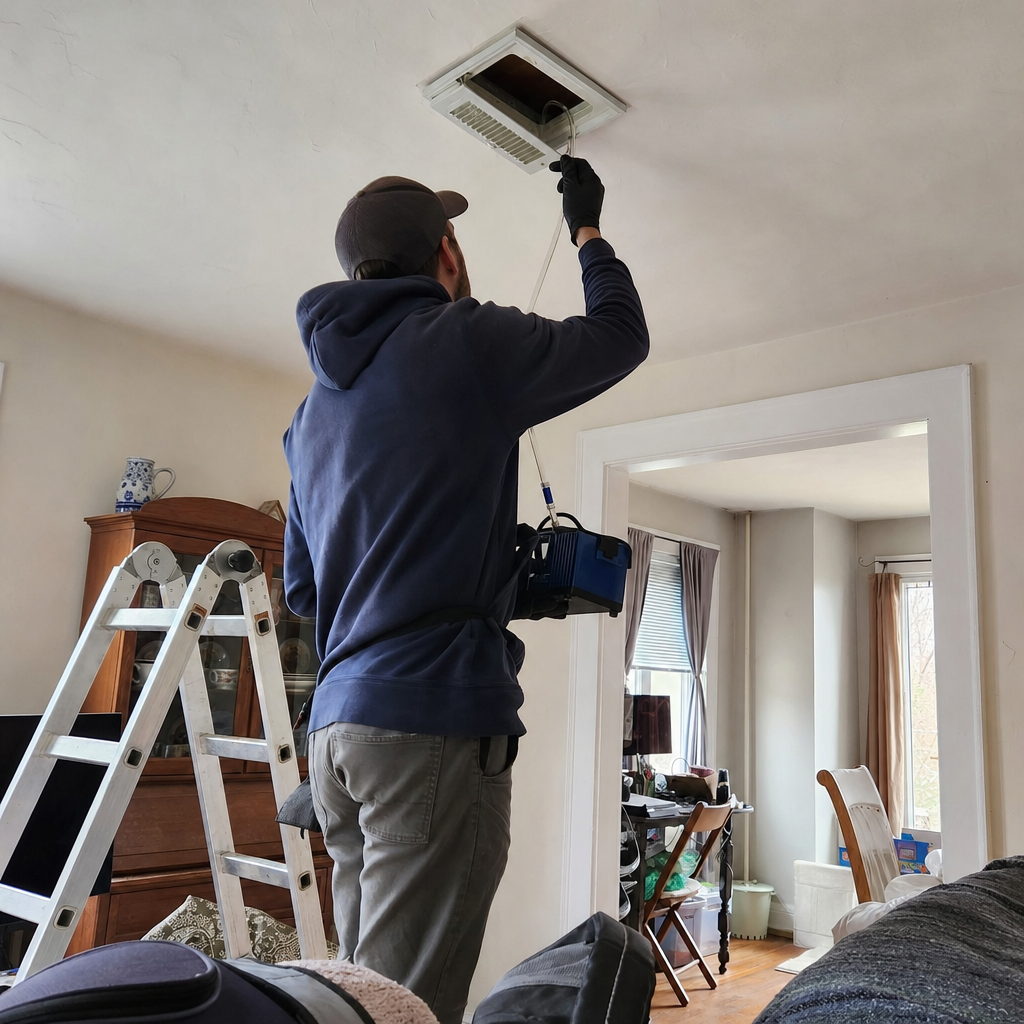
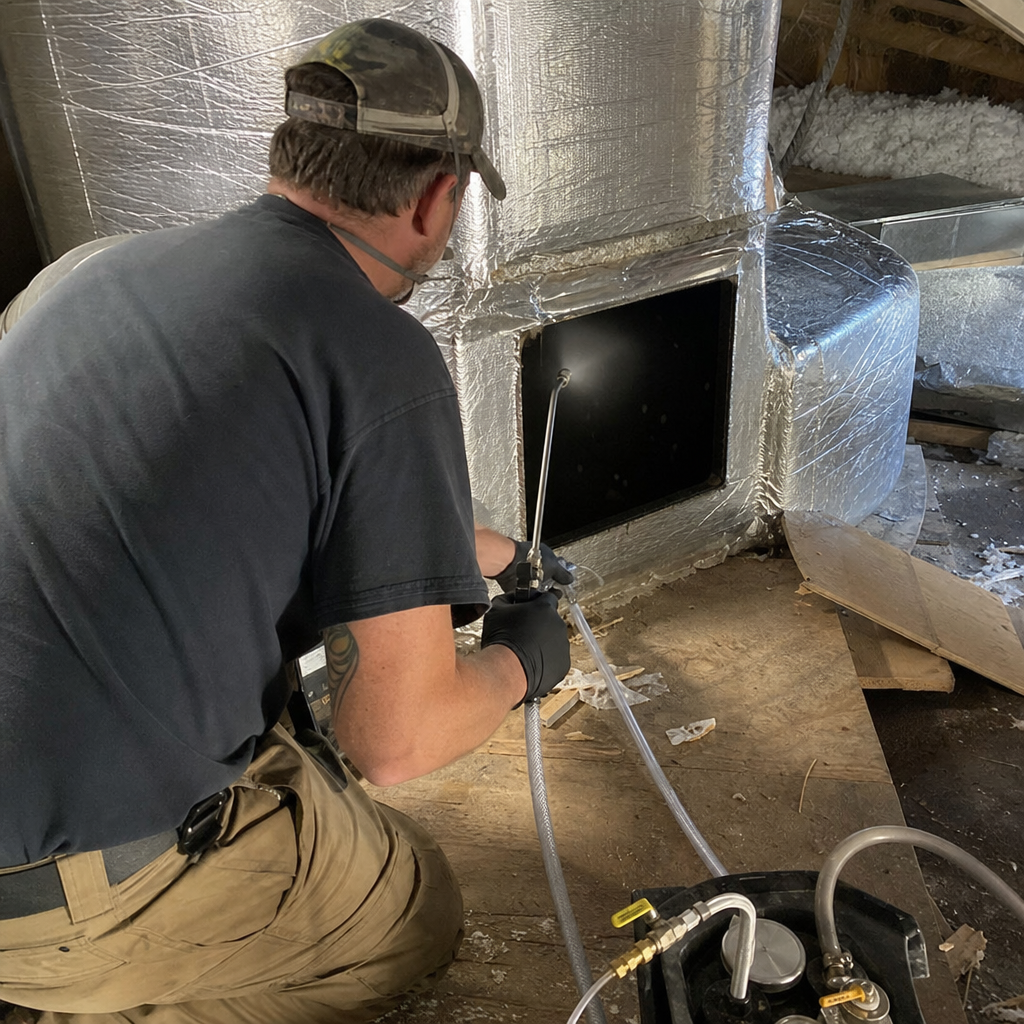
Fast, Reliable Air Quality & Sanitizing Across District Heights
Air quality sanitizing in District Heights, MD typically costs $280–$650 for whole-system treatment and is usually completed in a single visit. For homes with older ductwork or active mold issues, we recommend a combined duct cleaning and sanitizing package that runs $450–$890 depending on system size and contamination level. Call (855) 301-6549 for a free estimate — we’ll inspect your system and give you an exact quote before any work begins.
We’ve been driving to District Heights since 2011, and Robert Garcia knows the difference between a quick spray job and actual sanitizing that lasts. District Heights sits just inside the Beltway with easy access from Pennsylvania Avenue and Marlboro Pike, so we’re typically on-site within 45 minutes of a call. Whether you’re in a 1950s Cape Cod off District Heights Parkway, a garden-style rental near Walker Mill Road, or a split-level in the 20747 ZIP, we’ve worked on your type of ductwork before — probably dozens of times.
The housing here tells a specific story. Post-WWII Cape Cods, ramblers, and split-levels built in the 1950s–1970s for DC-area federal workers still dominate the streets, many running original or heavily patchworked sheet-metal ductwork. That matters for air quality work. Our Air Quality & Sanitizing team doesn’t just treat symptoms — we trace contamination back to the source, which in District Heights often means disassembling junctions that haven’t been opened since the Carter administration.
Why Apex Air Duct Cleaning Maryland Is District Heights’s Preferred Air Quality & Sanitizing Company
Fourteen years and 254 reviews averaging 4.7 stars — that pairing matters in a market full of coupon-driven cleaners who show up with a shop vac and a bottle of generic spray. Robert Garcia handles every job personally as owner and lead technician. You’re not getting a dispatched crew with a weekend training certificate. You’re getting the person whose name is on the business.
District Heights customers specifically mention our thoroughness in reviews — the willingness to crawl into unconditioned spaces, to pull apart junctions others skip, to explain what we found rather than just invoice and leave. We’ve earned that reputation one 20747 address at a time.
Our response time to District Heights averages under 45 minutes because we’re based in Baltimore with direct routing via I-295 and the Beltway. For emergency situations — active mold blooms, post-flood sanitizing, severe allergy flare-ups — we prioritize same-day service.
We also understand the local rental market. District Heights’s 20747 ZIP code has a rental-occupancy rate significantly higher than nearby suburbs like Bowie or Upper Marlboro, meaning many duct systems in garden-style apartments go unserviced for years between tenants, creating a concentrated backlog of uncleaned, mold-prone ductwork. Property managers in District Heights call us specifically because we document conditions thoroughly for lease compliance and can coordinate access with tenants.
Our Air Quality & Sanitizing Services in District Heights
Mold Treatment
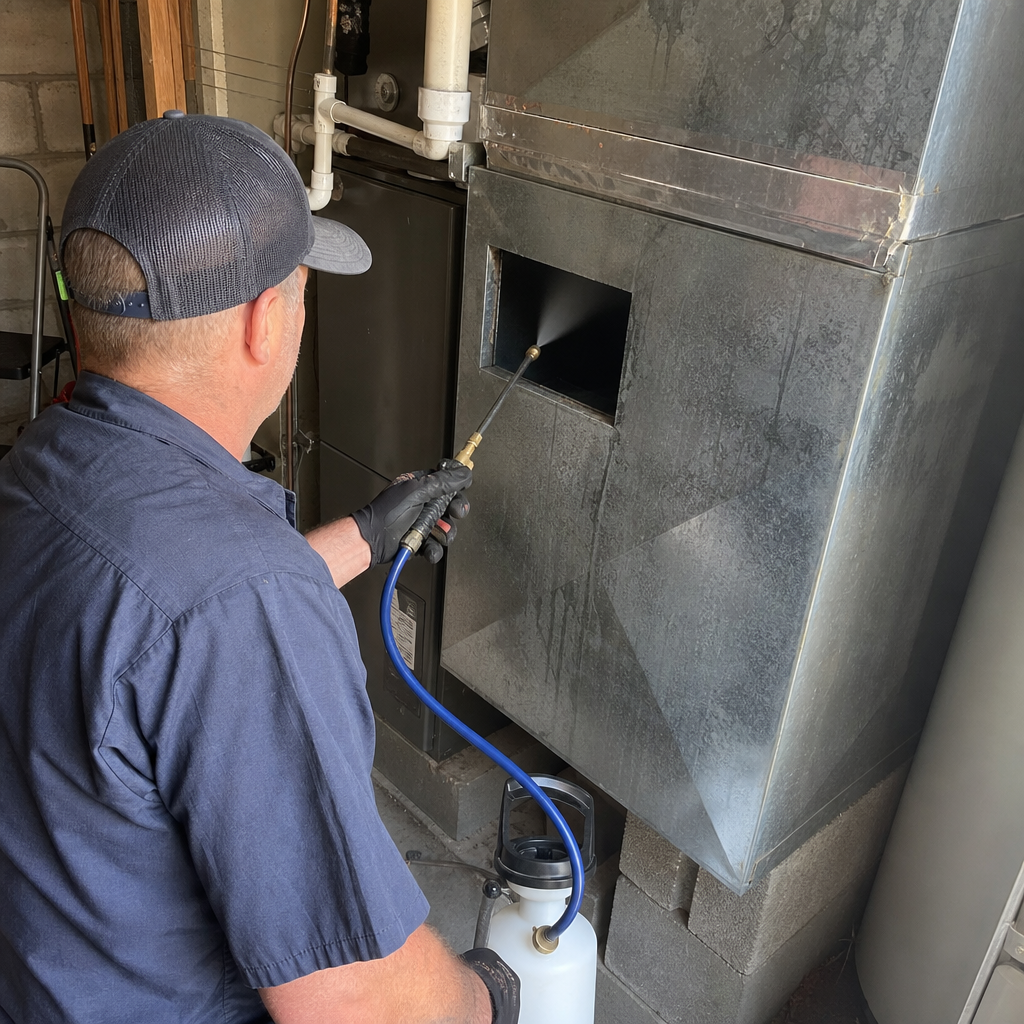
Mold treatment in District Heights runs $320–$580 for localized remediation in a standard residential system, or $650–$1,100 for whole-system treatment in homes with extensive attic or crawl-space duct runs. District Heights’s humid subtropical climate pushes summer dew points into the upper 60s and low 70s — moisture that finds its way into any duct with pinhole leaks or failed seals. Original 1950s galvanized trunk lines in walk-up crawl spaces develop pinhole leaks from decades of condensate, drawing in humid air that fuels mold colonies throughout the system. We don’t just kill visible growth; we trace the moisture source, treat with EPA-registered antimicrobial agents, and seal the system to prevent recurrence.

Bacteria Sanitizing
Whole-system bacteria sanitizing in District Heights typically costs $280–$450. The region’s long cooling season — heavy compressor runtime from late May through September — continuously draws particulates and humid air deep into older duct systems. In rental units, tenant turnover cycles of 1–2 years allow biological growth to accumulate undisturbed in attic duct runs. We use HEPA-contained extraction with Abatement Technologies equipment to prevent cross-contamination during service, then apply hospital-grade sanitizing agents. For properties near the busy corridors of Pennsylvania Avenue or Marlboro Pike, outdoor pollutant infiltration adds another layer of bacterial loading that standard cleaning won’t address.

Odor Removal
Odor removal services in District Heights range from $180 for targeted treatment of a single contamination source to $520 for whole-system deodorizing with source elimination. The most common odor source we treat in District Heights homes isn’t pet dander or cooking residue — it’s microbial growth in flex-duct splices added during basement finishing projects. Informal room additions and basement finishing, extremely common in this neighborhood, frequently added flex-duct branches spliced onto aging main lines without system rebalancing. Those junctions trap organic debris in humid conditions, producing a musty, sour smell that circulates every time the HVAC cycles. We disassemble these splices, clean both sides, and re-seal with proper materials — not cover-up sprays.
UV Light Installation
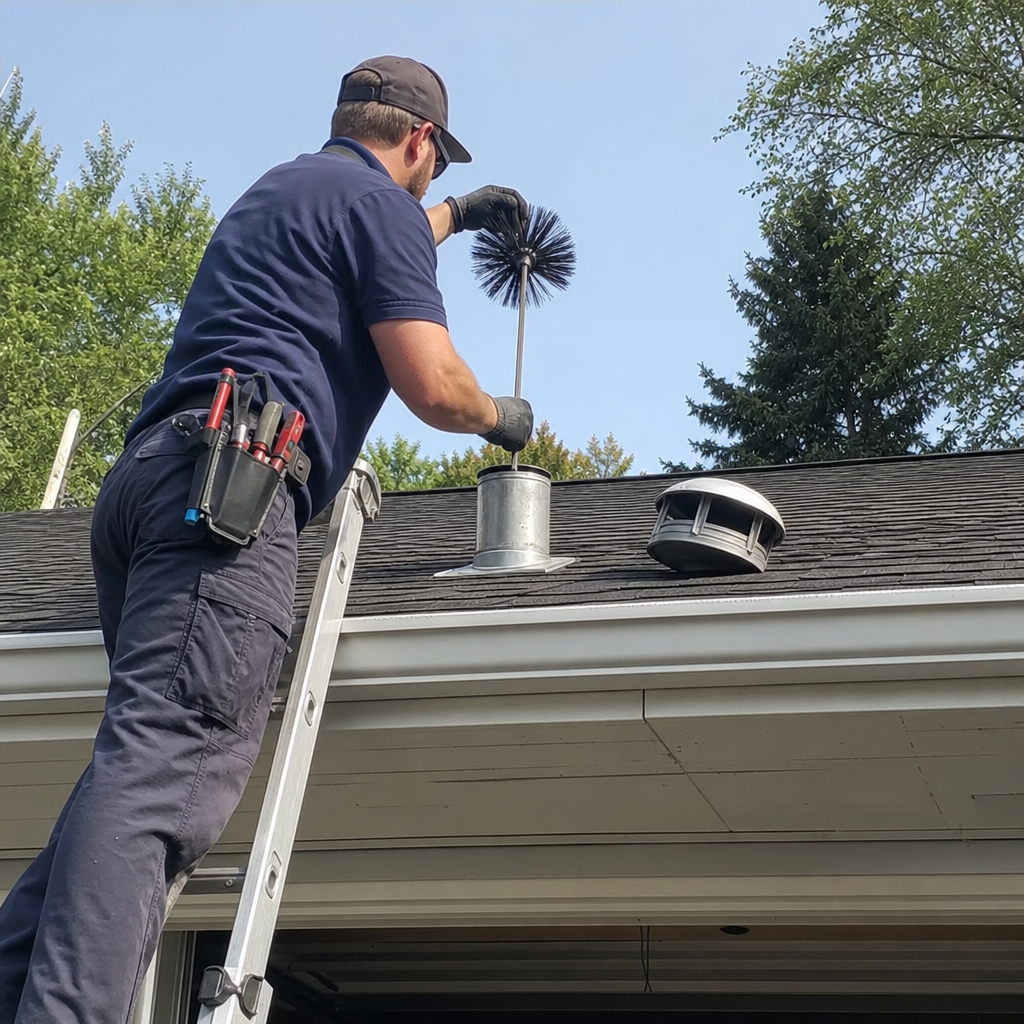
UV light installation in District Heights costs $380–$650 per unit, with most 1960s split-levels requiring two units for full coverage of the main trunk and return plenum. Can UV light installation help with mold in your 1960s split-level’s ductwork? Yes — specifically at the evaporator coil and in the return plenum where moisture concentrates. We install Honeywell and Aprilaire UV-C systems sized to your duct dimensions, not generic units clamped wherever they’ll fit. For District Heights’s older housing stock, UV is particularly effective when combined with physical cleaning of existing contamination; it’s a maintenance tool, not a magic fix for decades of neglect.
What happens when you call
- 1
A real person answersNo phone trees — you reach a local pro.
- 2
You get an upfront price rangeHonest numbers before anyone is dispatched.
- 3
A background-checked tech heads outLicensed & insured, dispatched right away.
- 4
You approve before work beginsNothing starts until you say go.
Trusted Brands We Service in District Heights
We stock parts and treatments from Honeywell, Aprilaire, and Guardsman for District Heights customers — brands we specify because they publish performance data and stand behind their products. For cleaning and containment, we run Rotobrush and Nikro extraction systems and seal work zones with Abatement Technologies negative-air equipment. When you’re dealing with 60-year-old ductwork, generic equipment doesn’t cut it. The geometry changes in District Heights’s patched-together systems require brushes that can navigate tight transitions and vacuums with enough suction to pull debris through long, uninsulated runs. We keep common Honeywell and Aprilaire UV replacement lamps in stock, so District Heights customers aren’t waiting a week for a specialty order when their system needs service.
Common Air Quality & Sanitizing Problems We See in District Heights Homes
- Pinhole leaks in galvanized trunk lines. Original 1950s–1960s galvanized steel develops pinholes from decades of condensate exposure in District Heights’s humid crawl spaces. Each leak becomes a moisture injection point that feeds mold colonies downstream — and most homeowners don’t know it’s happening until we camera the system.
- Flex-duct dead ends from basement finishing. Basement finishing with carelessly spliced flex-duct runs creates dead-end debris traps that standard cleaning methods miss. The flex material itself degrades faster in District Heights’s humidity, shedding fiberglass particles into the airstream while trapping organic material at the splice point.
- Undisturbed microbial growth in rental attic runs. In rental units, tenant turnover cycles of 1–2 years allow biological growth to accumulate undisturbed in attic duct runs. By the time a new tenant reports “allergy problems,” the contamination has often spread through the entire branch line.
- Failed seals at 1990s-era junction additions. Technicians working 20747 regularly find 1960s galvanized trunk lines with sections of flex duct mechanically clamped on at some later decade — joints that trap grease, dust, and in District Heights’s humidity, microbial growth at the exact transition point where standard rotary-brush rigs struggle to make the geometry change.
We serviced a 1963 split-level on Marlboro Pike in 20747 where the original galvanized trunk line had a flex-duct splice added during a 1990s basement finish — the joint was packed with dust and microbial growth because the rotary brush couldn’t navigate the geometry change. We disassembled the junction, cleaned both sides with a HEPA vacuum and antimicrobial spray, then re-sealed it, reducing the homeowner’s allergy symptoms significantly.
Pricing for Air Quality & Sanitizing in District Heights, MD
| Service | Typical Range in District Heights |
|---|---|
| Whole-system bacteria sanitizing | $280–$450 |
| Localized mold treatment | $320–$580 |
| Whole-system mold remediation | $650–$1,100 |
| Odor removal (targeted source) | $180–$320 |
| Whole-system deodorizing | $380–$520 |
| UV light installation (per unit) | $380–$650 |
| Combined duct cleaning + sanitizing | $450–$890 |
What moves you within these ranges? System size, contamination extent, and accessibility. A single-story Cape Cod with a crawl space and light mold spotting runs toward the lower end. A three-level split-level with multiple flex-duct splices, active mold in the attic trunk, and a finished basement branch runs higher. We inspect before we quote — always. No exceptions. Call (855) 301-6549 and we’ll schedule a free assessment, typically within 24 hours in District Heights.
We Also Serve Cities Near District Heights
Our service radius covers the full southern Prince George’s corridor. We regularly handle air quality and sanitizing work in Forestville along Allentown Road, Silver Hill and Suitland near the Metro corridor, and the combined Suitland-Silver Hill area. Each shares District Heights’s older housing stock challenges, though the rental-concentration issue in 20747 remains uniquely acute. If you’re unsure whether your address falls in our coverage, call — we know the local boundaries and won’t waste your time.
Serving District Heights, MD — Our Local Coverage Area
We’re based in the District Heights area and know this community well. Use the map below to see our service coverage — if you’re nearby, we can almost certainly help.
FAQs — Air Quality & Sanitizing in District Heights
District Heights’s 1950s–1970s housing stock requires more intensive sanitizing because original galvanized ductwork develops pinhole leaks and flex-duct splices trap debris in ways that modern seamless duct systems don’t. Newer homes in Bowie or Upper Marlboro use sealed flex runs with proper junction boxes; District Heights’s patched-together systems need disassembly and hand-cleaning at transition points. The 14 years we’ve spent working on these specific configurations means we spot problems faster and fix them more thoroughly than crews trained only on newer construction.
The 20747 ZIP code’s high rental-occupancy rate means duct systems routinely go 3–5 years between professional cleanings as tenants turn over and landlords defer maintenance. That gap allows mold colonies to establish in attic and crawl-space runs, often spreading through the entire branch before anyone reports symptoms. We coordinate directly with property managers for access and provide documentation for lease compliance — call (855) 301-6549 to discuss multi-unit scheduling.
Yes, UV-C light at the evaporator coil and return plenum suppresses mold growth on wet surfaces, which is critical in District Heights’s humid climate where cooling systems run five months straight. However, UV won’t remove existing buildup in your trunk lines — it prevents new growth after we’ve physically cleaned the system. For 1960s split-levels, we typically recommend two units: one at the coil, one in the return. Installation runs $380–$650 per unit.
Microbial growth at flex-duct splices added during basement finishing — not pet odors or cooking residue. That musty, sour smell that worsens when the AC kicks on usually traces to a 1980s or 1990s splice where organic debris has composted in humid conditions for decades. We find these by following the smell with inspection cameras, disassemble the junction, clean both sides with HEPA extraction and antimicrobial treatment, and re-seal properly. Call (855) 301-6549 if you’re noticing that specific pattern.
We disassemble them. Standard rotary brushes — even our Rotobrush systems — can’t navigate sharp geometry changes where 1960s galvanized trunk meets 1990s flex duct. In District Heights, we routinely cut the mechanical clamp, clean both sides with HEPA vacuum and contact sanitizers, then re-seal with proper transition fittings and mastic sealant. It takes longer than a brush-and-spray job. It also actually works. For a free assessment of your specific junctions, call (855) 301-6549.
Ready to breathe cleaner air in your District Heights home? Robert Garcia and our team are available for free estimates and same-day emergency service throughout 20747 and 20753. Whether you’re dealing with musty odors, allergy flare-ups, or visible mold concerns, we’ll inspect your system, show you exactly what we find, and give you upfront pricing before any work begins. No generic treatments. No shortcuts around junctions that need real attention. Call (855) 301-6549 now — we’ll typically be on-site within 45 minutes.
Written by Robert Garcia, Owner at Apex Air Duct Cleaning Maryland, serving District Heights since 2011.