
Fast, Reliable Duct Repair & Sealing Across Washington, D.C.
Duct repair and sealing in Washington, D.C. typically costs $280–$650 for most residential jobs, with same-day or next-day service available throughout the District. We make the trip from Baltimore regularly — usually within 90 minutes to Capitol Hill, Shaw, and Petworth — because Robert Garcia handles the fieldwork personally and knows these houses inside out. Call (855) 301-6549 for a free estimate.
We’re not general HVAC contractors picking up side work. Our Duct Repair & Sealing team is built around 14 years of focused indoor air quality experience, and we’ve learned that Washington, D.C.’s housing stock demands a different approach than standard suburban systems. The brick row houses dominating neighborhoods from Adams Morgan to Columbia Heights were never designed for forced-air ductwork. When central HVAC was retrofitted into these homes during the 1970s through 1990s, installers routed ducts through closets, soffits, and crawl spaces with tight, non-standard bends that trap debris and resist conventional equipment. Combined with the Potomac–Anacostia basin’s persistent humidity — one of the most moisture-laden urban microclimates on the East Coast — these undersized, irregularly routed ducts accumulate mold and microbial growth at rates we simply don’t see in drier or newer markets.
Why Apex Air Duct Cleaning Maryland Is Washington, D.C.’s Preferred Duct Repair & Sealing Company
Our reputation in Washington, D.C. has grown through word-of-mouth among homeowners who’ve watched enough contractors underestimate their row house. We’ve earned 254 reviews averaging 4.7 stars, and a significant share come from D.C. customers who found us after other companies declined jobs with tight access or unconventional duct layouts. Robert Garcia doesn’t delegate to crews — he’s the lead technician on every job, which means the person with 14 years of specialized experience is the one crawling through your crawl space or cutting into your plaster chase.
Response time matters in a humid climate. We typically reach Capitol Hill, Shaw, and Petworth within 90 minutes of call confirmation, and we carry Rotobrush and Nikro equipment plus Abatement Technologies containment gear so we’re not making return trips for tools. That matters in Washington, D.C., where parking is tight, access is limited, and you don’t want a technician discovering they’re underequipped after they’ve already torn open your closet chase.
We know the local failure patterns. Mastic tape peeling off panned floor joist returns within months. Flex duct sagging and kinking in mid-century condo risers. Closet plenums pumping rodent debris back into living spaces. These aren’t theoretical problems for us — they’re what we corrected last week.
Our Duct Repair & Sealing Services in Washington, D.C.
Duct Sealing
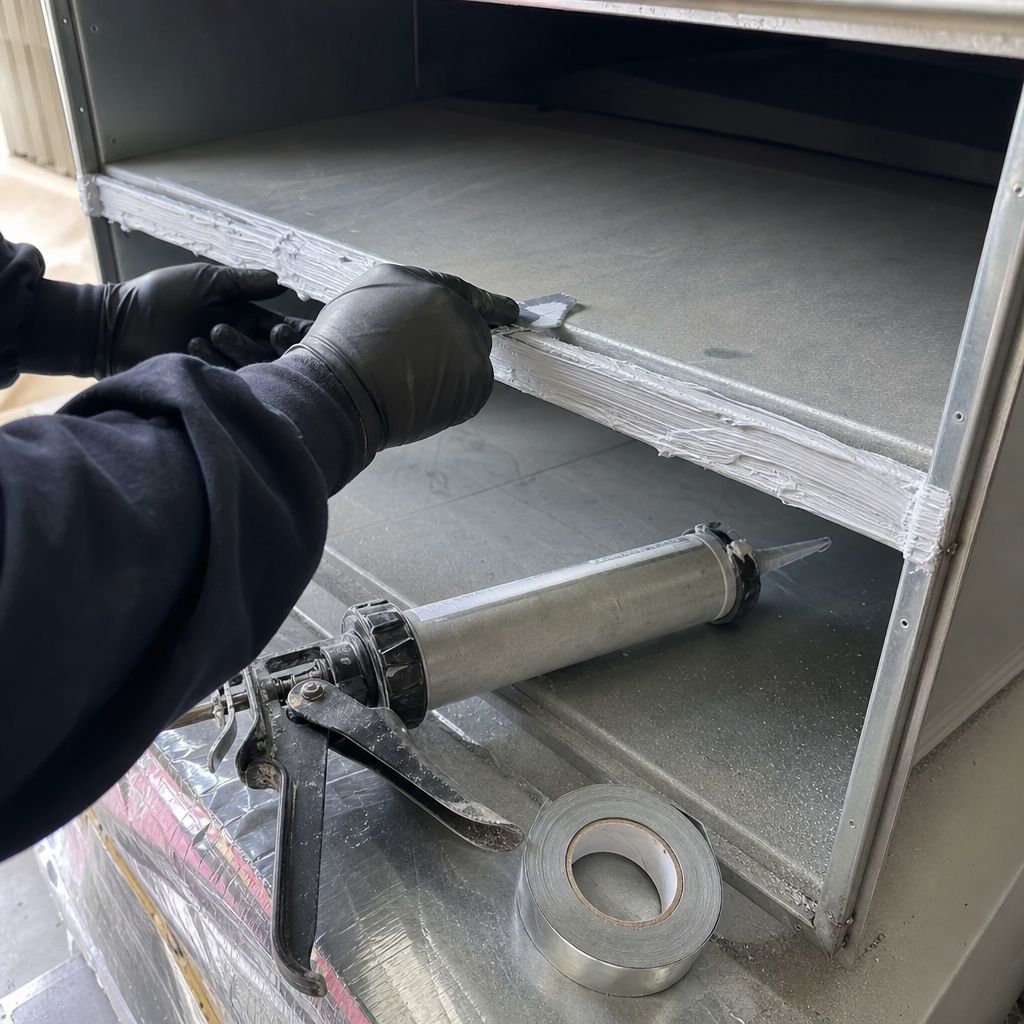
Sealing in Washington, D.C. isn’t about chasing obvious gaps with a caulk gun. In retrofitted row houses, we find supply leaks where 1980s installers cut corners through plaster walls, and return leaks where panned floor joists were never properly closed. A typical duct sealing job in Washington, D.C. runs $320–$580 for a single-system row house, with multi-zone Capitol Hill properties running higher due to access complexity. We pressurize the system, locate leaks with smoke testing, then seal with materials rated for the District’s humidity — not tape that’ll peel by the next summer.

Flex Duct Repair
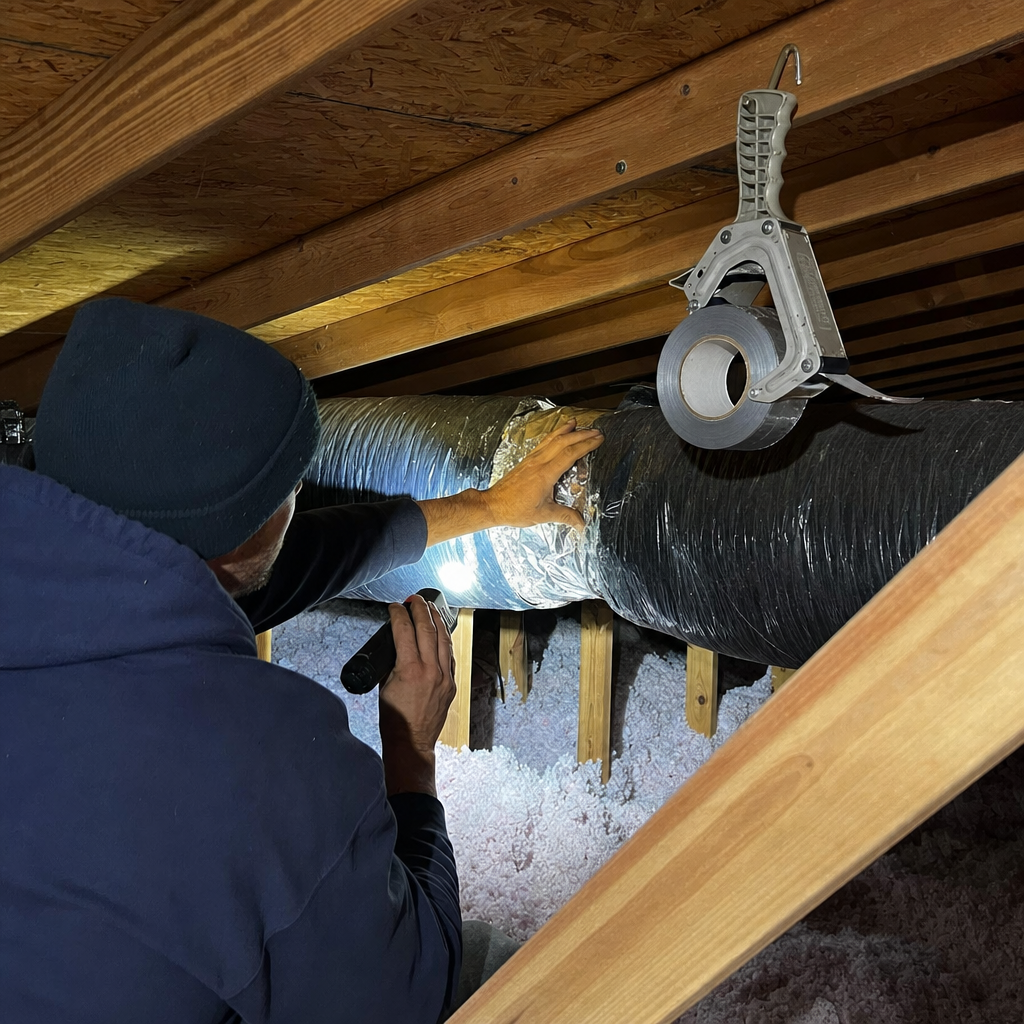
Flex duct in Washington, D.C.’s condo buildings and basement retrofits takes a beating. The city’s moisture load causes sagging and kinking that restricts airflow and traps condensation, which then corrodes adjacent metal components. We replace damaged flex runs with properly supported, insulated sections sized for the actual load — not whatever the original installer had in the truck. Flex duct repair in Washington, D.C. typically costs $180–$340 per run, depending on access and length. In Columbia Heights mid-rises and Adams Morgan basement apartments, we regularly find flex crushed behind water heaters or draped across unsealed crawl spaces.

Metal Duct Repair
Galvanized metal ducts in D.C.’s 1950s–1970s apartment buildings corrode from the inside out in this humidity. We patch accessible sections, replace corroded risers, and transition to lined or insulated alternatives where the original metal has degraded beyond repair. Metal duct repair in Washington, D.C. ranges from $260 for localized patching to $720+ for full riser replacement in shared systems. We assess whether repair or replacement makes sense — sometimes a corroded vertical riser in a Petworth four-unit is past saving, and we’ll tell you straight.

Duct Insulation
Uninsulated or degraded duct insulation in Washington, D.C.’s humid summers causes condensation that feeds mold growth on duct liner and nearby structural members. We install proper insulation on supply runs in unconditioned spaces — attics, crawl spaces, garage soffits — using materials that won’t degrade in the District’s moisture. Duct insulation work in Washington, D.C. typically runs $340–$620 depending on linear footage and access difficulty. In Shaw row houses with rooftop-mounted air handlers, we’ve seen supply drops sweat through ceilings because original insulation collapsed decades ago.

Mastic Sealant Application
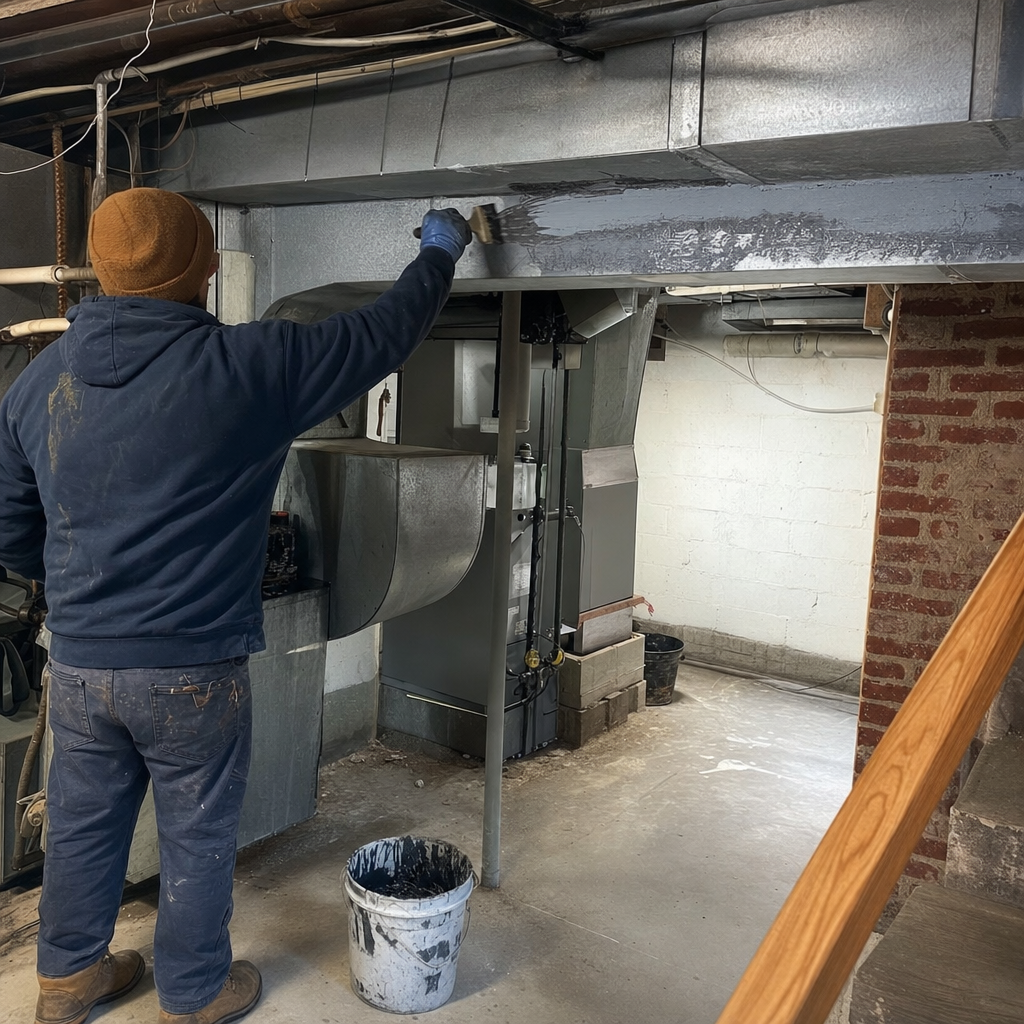
Here’s where our equipment investment shows. We apply mastic sealant — not tape — to all joints and seams in Washington, D.C. systems. Mastic remains flexible and adherent in high-humidity environments where tape fails. We use Rotobrush application systems for consistent coverage in tight spaces, and we back every mastic job with a workmanship guarantee. Mastic sealant application in Washington, D.C. typically adds $140–$280 to a sealing job, or we bundle it with full duct sealing for comprehensive coverage. For D.C.’s humidity, mastic isn’t optional — it’s the only material that lasts.
What happens when you call
- 1
A real person answersNo phone trees — you reach a local pro.
- 2
You get an upfront price rangeHonest numbers before anyone is dispatched.
- 3
A background-checked tech heads outLicensed & insured, dispatched right away.
- 4
You approve before work beginsNothing starts until you say go.
Trusted Brands We Service in Washington, D.C.
We work with Honeywell and Aprilaire air quality systems regularly found in Washington, D.C.’s higher-end renovations and condo conversions, and we stock common replacement components to avoid delay. Our Abatement Technologies containment equipment prevents cross-contamination during repair work — critical in tight row house layouts where living space sits inches from duct access points. We don’t show up with a shop vac and hope for the best. The Rotobrush and Nikro systems we deploy are professional-grade extraction and application tools, and we select sealants and insulation products rated specifically for mid-Atlantic humidity zones.
Common Duct Repair & Sealing Problems We See in Washington, D.C. Homes
- Mastic tape failure on panned floor joist returns. In D.C.’s humidity, tape adhesive degrades within months on panned joist returns common in Capitol Hill and Petworth basements. The tape peels, gaps open, and conditioned air leaks into unconditioned crawl spaces — driving up bills and pulling musty air back into the system.
- Flex duct sagging in mid-century condo risers. High moisture load causes flex duct to sag and kink in vertical runs, especially in Columbia Heights and Adams Morgan buildings from the 1960s and 1970s. Restricted airflow traps condensation, which corrodes metal connections and breeds mold on surrounding surfaces.
- Unlined closet plenums recirculating contaminants. Improperly sealed closet chases converted to return plenums during 1980s retrofits allow attic dust, rodent debris, and mold to bypass filtration entirely. We find this in Shaw row houses regularly — the homeowner cleans and sanitizes, then the unsealed plenum re-contaminates the whole system within weeks.
- Mold in supply registers from condensation-sweating ducts. The Potomac basin’s sustained summer humidity — often 70%+ for weeks — causes supply ducts in unconditioned spaces to sweat continuously. Without proper insulation and sealing, that moisture feeds mold colonies that blow spores directly into bedrooms and living areas.
Pricing for Duct Repair & Sealing in Washington, D.C., DC
| Service | Typical Range in Washington, D.C. |
|---|---|
| Duct sealing (single system, row house) | $320 – $580 |
| Flex duct repair/replacement (per run) | $180 – $340 |
| Metal duct patching | $260 – $420 |
| Metal riser replacement (shared systems) | $520 – $720+ |
| Duct insulation (supply runs, unconditioned space) | $340 – $620 |
| Mastic sealant application (standalone or add-on) | $140 – $280 |
| Full system assessment with smoke testing | $95 – $150 (credited toward work) |
What moves you within these ranges? Access difficulty is the big variable in Washington, D.C. — cutting into a plaster chase in a 1920s Capitol Hill row house takes longer than sealing exposed basement ducts in a newer build. Multi-zone systems, shared risers in condos, and the need for containment during occupied repairs all add labor. We quote upfront after assessment, and estimates are free. Call (855) 301-6549 to schedule — we’ll give you a firm number, not a bait-and-switch.
We Also Serve Cities Near Washington, D.C.
We regularly work in Shaw, Adams Morgan, Rosslyn, and Arlington — the same row house and mid-rise building types, the same humidity challenges, the same need for specialized equipment and experienced hands. Robert Garcia makes the trip from Baltimore for assessment and repair work throughout the metro area, and we coordinate scheduling to minimize wait times for D.C.-side customers.
Serving Washington, D.C., DC — Our Local Coverage Area
We’re based in the Washington, D.C. area and know this community well. Use the map below to see our service coverage — if you’re nearby, we can almost certainly help.
FAQs — Duct Repair & Sealing in Washington, D.C.
Yes — that’s exactly what we find in Petworth, Capitol Hill, and Columbia Heights regularly. During 1980s HVAC retrofits, installers often converted plaster-wall closets or chases into return-air plenums without liners, access panels, or proper sealing. Decades of drywall dust, mouse debris, and mold accumulate in these spaces, and the draft you feel is unfiltered air being pulled through contaminated cavities. We cut access openings, clean and seal the plenum with mastic, then install proper doors for future maintenance. Call (855) 301-6549 — we’ll confirm with a camera inspection, and estimates are free.
Not necessarily — localized corrosion can often be patched or section-replaced, especially in supply runs. We assess with borescope cameras to determine whether corrosion is surface-scale or has penetrated through. Full replacement typically becomes necessary only in shared vertical risers or where galvanized ducts have deteriorated structurally. For most Capitol Hill single-family and duplex systems, targeted repair plus proper sealing and insulation extends service life significantly. Call (855) 301-6549 for an assessment — we’ll tell you honestly whether repair or replacement makes sense.
Sealing alone won’t dehumidify your space, but it prevents conditioned air from leaking into wall cavities and stops humid unconditioned air from being drawn into the system. In Columbia Heights condos with flex duct in shared risers, we often find that poorly sealed connections are pulling moist basement or attic air directly into return pathways. Proper sealing, combined with ensuring flex runs are fully supported and not kinked, restores designed airflow and allows your AC to dehumidify effectively. Call (855) 301-6549 — we’ll pressure-test the system and show you exactly where the leaks are.
Mastic sealant is significantly better for Washington, D.C.’s sustained high humidity. Tape adhesives degrade rapidly in moisture-laden environments — we’ve peeled failed tape off panned joist returns in Shaw and Petworth homes within six months of application. Mastic remains flexible, adherent, and airtight through seasonal humidity swings and decades of thermal cycling. We apply it with Rotobrush systems for consistent coverage in tight retrofitted spaces. For D.C. row houses and condos, mastic isn’t a premium upgrade — it’s the baseline for work that lasts.
Persistent mold at supply registers almost always indicates an upstream moisture source: uninsulated ducts sweating in humid attics or crawl spaces, or leaks pulling moist unconditioned air into the system. In Washington, D.C.’s climate, supply drops running through unconditioned spaces condensate continuously during summer months. Cleaning the registers treats the symptom; sealing and insulating the ductwork treats the cause. We use Abatement Technologies containment during repair to prevent spore dispersal through your living space. Call (855) 301-6549 — we’ll trace the moisture source and fix it properly.
Ready to stop losing conditioned air into your walls and crawl spaces? Robert Garcia handles every Washington, D.C. duct repair and sealing job personally, with 14 years of specialized experience and equipment built for the District’s challenging housing stock. Call (855) 301-6549 for a free estimate — we’ll assess your system, quote upfront, and get the work done right in one trip.
Written by Robert Garcia, Owner at Apex Air Duct Cleaning Maryland, serving Washington, D.C. and Baltimore since 2010.